Custom Web Application Development: What Really Matters After Launch
The excitement around the launch of your web app often feels like the finish line, but in truth, it’s just the beginning. When you invest in custom web application development, the real challenge starts after going live: how your app performs in real-world conditions, how users interact with it, and how effectively it supports your long-term goals.
A successful post-launch strategy blends technology, performance monitoring, and user insight. Once your app is live, feedback starts pouring in, bugs surface, and user patterns emerge. This is the phase where your product evolves from a functional build into a sustainable business asset. Let’s explore what truly matters after launch and how to keep your custom web app thriving.
Why the Launch Is Just the Beginning
When you opt for custom web application development, you’re not just building a piece of software; you’re creating a long-term digital ecosystem for your business. Many teams view the launch as the end, but in reality, it’s the start of continuous improvement.
Treating launch day as “mission accomplished” can be risky. Apps that aren’t monitored, maintained, or optimized tend to lose traction quickly. According to a 2024 Statista report, 70% of users abandon an app within three months if performance or usability issues persist. This shows that what you do after the launch often matters more than what happens before it.
The smartest development teams plan post-launch strategies from day one: scheduling updates, feedback cycles, and monitoring processes into their roadmap. That’s how a good product becomes a great one.
Prioritizing Stability and User Experience
Once your app goes live, stability becomes the foundation of user trust. No matter how impressive your interface looks, users will lose confidence if they experience downtime or lag. In custom web application development, post-launch stability is not a “nice to have”. It’s a core requirement that determines whether your app will scale successfully or struggle under pressure.
“In today’s fast-paced digital environment, app performance is as critical as functionality. Even a one-second delay can reduce user satisfaction by 16%.” — Google Web Vitals Report, 2024
Performance Basics
Performance optimization should be continuous. Developers should actively monitor load times, responsiveness, and server uptime. Using automated tools to track performance metrics can help detect issues before users do.
Here are key performance checkpoints:
Page load speed: Aim for under 2.5 seconds.
Uptime: Maintain at least 99.9%.
Error rate: Keep critical errors below 1%.
Database performance: Regularly index and optimize queries.
These benchmarks not only improve user experience but also enhance SEO, engagement, and retention.
User Experience Beyond Design
User experience (UX) isn’t just about clean layouts; it’s about empathy and usability. The best web application design and development teams analyze how users actually interact with the product. Post-launch means tracking navigation flow, interaction heatmaps, and conversion rates.
Some best practices include:
Streamlining navigation to reduce friction.
Simplifying forms or workflows that cause drop-offs.
Conducting usability testing every few months.
Implementing micro-interactions that guide users intuitively.
Small UX improvements can lead to huge engagement gains. A 2024 Adobe study found that brands prioritizing UX saw a 35% higher customer retention rate than those that didn’t.
Ongoing Maintenance and Optimization
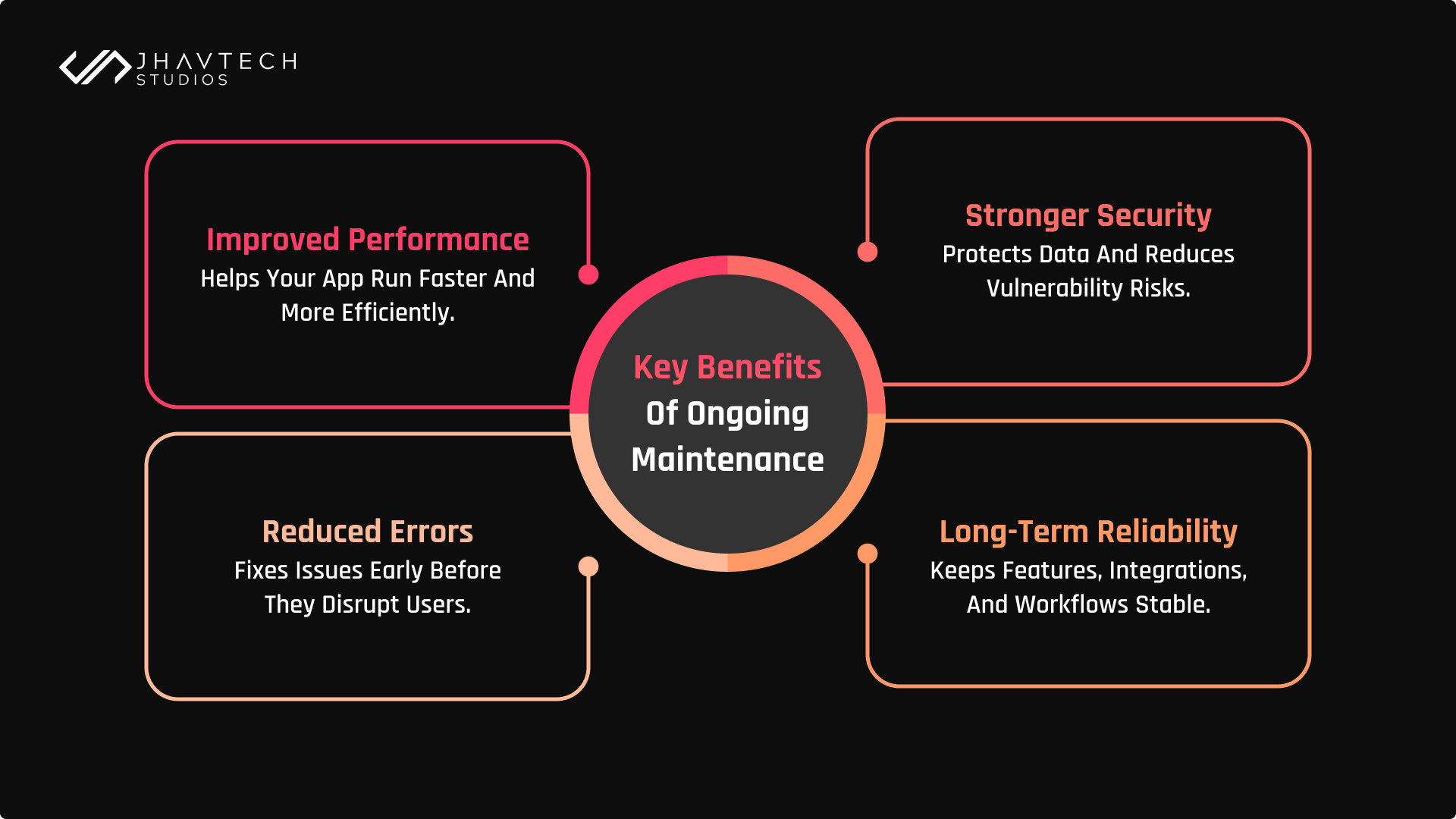
Even the most advanced custom software solutions need regular attention after launch. Maintenance isn’t just about fixing bugs; it’s about evolving your system to stay aligned with user needs and business goals.
Why Maintenance Matters
Every web app interacts with a constantly changing environment: updates to browsers, operating systems, APIs, and security protocols. Without proactive maintenance, performance can degrade over time.
A strong maintenance plan includes:
Scheduled audits of security, performance, and functionality.
Updating third-party libraries and frameworks.
Monitoring for broken integrations or outdated dependencies.
Backing up data and testing recovery procedures.
Ignoring maintenance can lead to technical debt, increased downtime, and lost customers. Consistent attention keeps your system reliable and scalable.
Post-Launch Maintenance and Optimization
Optimization ensures your app keeps pace with user expectations. It’s not just about improving speed; it’s about refining every layer of your application. For teams specializing in custom web application development, optimization becomes an ongoing strategy; one that balances technical excellence with real-world usability.
Examples include:
Code optimization to reduce load time.
Server-side caching to enhance performance.
Database restructuring for faster queries.
UI/UX design refreshes based on analytics insights.
Teams that treat optimization as a continuous discipline consistently outperform competitors. Studies from HubSpot show that apps updated regularly retain 2.5x more active users than those updated only when issues arise.
Scaling and Evolving for Growth
Once your app is stable and optimized, the next step is growth. Scalability determines whether your web app can handle more users, transactions, or features without breaking.
Scalable Web App Architecture Best Practices
Building scalability into your custom web application development process early on ensures smoother expansion later. Follow these scalable web app architecture best practices:
Adopt microservices or modular architecture for flexible scaling.
Use load balancing and horizontal scaling to distribute traffic efficiently.
Store data with cloud-based infrastructure for elasticity.
Implement caching strategies and content delivery networks (CDNs).
Design APIs that can handle versioning and higher throughput.
With these foundations, your system can scale without re-engineering, helping you handle growth confidently.
Evolving the Product
Scalability also means adaptability. As your business evolves, your app should too. Add features that reflect changing user needs, integrate with emerging tools, and refine your workflows.
When your development team adopts a mindset of evolution, your app stays relevant. Whether it’s expanding to mobile, adding AI-driven personalization, or supporting new markets, continuous evolution ensures your platform remains a business driver, not a bottleneck.
Adapting to Real-World Feedback
Once users start using your app in everyday scenarios, they reveal insights no test environment can replicate. Real-world feedback helps identify usability gaps, new opportunities, and unseen challenges. In custom web application development, this stage is especially critical because it bridges the gap between theoretical design and actual user behavior.
Why Feedback Matters
Every interaction your users have generates valuable data. Analytics tools like Hotjar or Mixpanel can show you where users drop off or get stuck. Feedback also exposes features that are underused or misunderstood, thereby providing vital information for prioritizing updates.
How to Manage the Feedback Loop
A structured feedback process turns insights into action. Here’s how to do it effectively:
Monitor analytics for behavioral trends.
Collect direct input through surveys, chatbots, and support tickets.
Categorize feedback into “quick fixes” and “strategic improvements.”
Communicate updates to show users their voices matter.
For web app development for business workflows, these insights often uncover bottlenecks or redundant steps that, once fixed, can significantly improve operational efficiency.
Continuous feedback not only strengthens your app but also builds trust, something that users appreciate seeing their input turn into tangible improvements.
Security, Data, and Long-Term Sustainability
In today’s environment, app security is non-negotiable. When dealing with user data or business operations, you must prioritize continuous protection and sustainability.
Security and Compliance
Security doesn’t end with deployment; it begins there. According to IBM’s Cost of a Data Breach Report 2024, the global average data breach cost reached USD 4.88 million, highlighting how prevention is far cheaper than recovery.
Security best practices for post-launch maintenance include:
Conducting regular vulnerability assessments and penetration tests.
Updating encryption protocols and authentication methods.
Monitoring third-party dependencies for vulnerabilities.
Maintaining strict data access policies and audit trails.
Robust security not only protects users but also enhances brand reputation and compliance readiness.
Sustainable Operations
Sustainability goes beyond environmental consideration. It’s about ensuring your app remains efficient, cost-effective, and maintainable over time.
Practical steps include:
Removing redundant code and unused assets.
Optimizing infrastructure for lower hosting costs.
Automating routine maintenance tasks.
Keeping documentation up to date for faster onboarding and handovers.
By focusing on sustainability, your team can spend less time firefighting and more time innovating.
Bringing It All Together
Launching your web app is an exciting milestone, but it’s far from the finish line. The long-term success of custom web application development depends on how you manage, monitor, and evolve your solution after launch.
To recap:
Prioritize performance and UX to retain users.
Maintain and optimize regularly to stay reliable.
Scale intelligently with sound architecture.
Leverage feedback to drive meaningful updates.
Secure and sustain your system for the long run.
The best web apps are not static; they grow, adapt, and improve continuously. Treating post-launch as a phase of evolution rather than conclusion ensures your app remains competitive and valuable.
Whether you’re focusing on post-launch maintenance and optimization, refining UX, or implementing scalable web app architecture best practices, consistency is the true key to success.
In the end, custom web application development isn’t a one-time event. It’s an ongoing partnership between technology, users, and business vision. Apps that are nurtured after launch don’t just survive... they thrive.