Why Your Product Images Look Cheap
Why Your Product Images Look Cheap
- When the Product Is Fine but the Image Still Fails
Many sellers eventually encounter the same frustrating situation.
The product itself is not bad.
The price is competitive.
The listing copy is acceptable.
Yet the images never perform well.
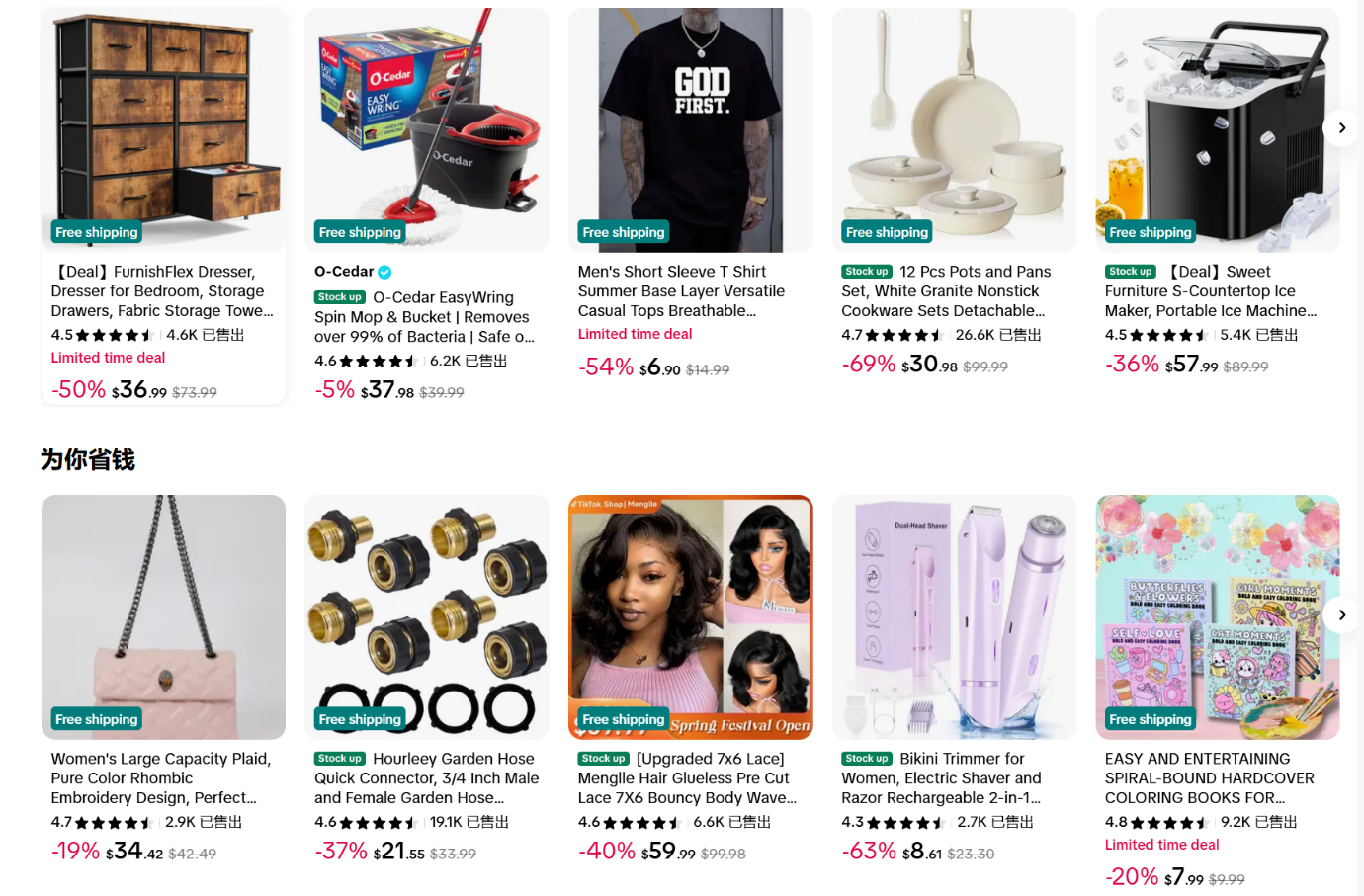
Meanwhile, a competitor selling a nearly identical product uploads a new image and it immediately looks more premium, more trustworthy, and more clickable.
This difference is rarely caused by the product itself.
More often, it comes from how the product is visually expressed.
E-commerce platforms have evolved significantly in recent years. The decision process for shoppers has become extremely compressed.
In many cases:
Three seconds determine whether a user stops scrolling
Five seconds determine whether they click
If the visual presentation lacks depth, lighting logic, and spatial realism, the product’s selling points never even get a chance to be explained.
Photography can solve this problem.
But photography also introduces its own limitations.
Studio shoots are expensive, slow, and difficult to iterate. When sellers need to constantly test new visual directions, traditional production workflows struggle to keep up.
This is why the discussion around tools such as Seedance 2 text to video has become increasingly common.
The real question is no longer whether AI can generate images or videos.
The real question is simpler:
Do the visuals you generate actually follow believable spatial logic?
2.Good E-commerce Visuals Are Built on One Principle: The Scene Must Feel Real
Most sellers are already experimenting with AI-generated product scenes.
But a common problem appears in many generated images.
The product looks like it was pasted onto the background.
You can often notice several subtle issues:
The product appears flat while the environment has depth
Shadows do not align with the light source
The angle of the object does not match the surface
The object appears to float rather than rest in the scene
These inconsistencies may seem minor, but they are immediately noticeable to viewers.
The result is an image that subconsciously feels artificial.
The difference between average product visuals and effective ones is not the complexity of the background.
It is whether the product genuinely belongs to the space it occupies.
This spatial coherence matters more than filters, color grading, or decorative elements.
Tools like Seedance 2 text to video are increasingly used not simply to generate visuals, but to ensure that generated content follows consistent scene logic.
When objects interact naturally with their environment—through light, perspective, and shadow—the entire image feels more credible.
3.E-commerce Competition Is Increasingly About Testing Density
Another major shift in online retail is how creative assets are produced and tested.
In the past, visual quality alone determined success.
Today, testing speed has become equally important.
A product image that performs poorly must be replaced quickly.
If a visual direction fails to generate clicks, sellers need to explore new variations immediately.
Traditional photography workflows struggle with this requirement.
A typical studio shoot may produce a single visual concept.
Reshooting requires scheduling, logistics, and additional costs.
Scene generation tools, including systems connected to Seedance 2 text to video, allow sellers to experiment with multiple visual concepts in a much shorter timeframe.
Within minutes, teams can test variations such as:
different lighting conditions
alternate scene environments
new composition styles
different emotional tones
When production costs decrease, the number of tests increases.
And in e-commerce, testing density often determines the ceiling of conversion rates.
4.Why Small Teams Often Struggle With Visual Quality
Many sellers assume that poor visuals are caused by low-budget products.
But in reality, the issue is often related to visual hierarchy.
Professional product photography relies on several subtle principles:
composition balance
light direction
foreground and background separation
depth and spatial layering
These elements determine where the viewer’s attention goes.
If the visual focus is incorrect, even a well-designed product can appear cheap.
When these structural elements are automatically handled—through properly designed prompts or generation frameworks—the product presentation improves dramatically.
This is one reason why tools that integrate Seedance 2 text to video workflows are becoming relevant for smaller teams.
They help standardize the spatial and lighting logic that traditionally required experienced photographers.
The goal is not to replace creative professionals.
The goal is to ensure that generated visuals do not look artificial or structurally incorrect.
5.Why Many AI Product Images Still Look Fake
The biggest mistake people make when generating product scenes is assuming that placing an object inside a background automatically creates a realistic image.
In reality, there is an important difference between two approaches.
Approach One:
The product is simply inserted into a scene.
Approach Two:
The product is physically integrated into the scene.
The difference becomes visible through several details:
orientation relative to gravity
surface contact points
shadow direction
reflection behavior
camera perspective alignment
If these elements are inconsistent, the product appears disconnected from the environment.
This is why spatial prompts are becoming more important when generating visuals for e-commerce.
Workflows that combine scene generation and Seedance 2 text to video pipelines often focus on maintaining these spatial relationships.
6.A Practical Prompt Framework for More Realistic Product Scenes
When generating product visuals, a simple but structured prompt can significantly improve realism.
Below is an example framework often used to maintain spatial integrity when creating product presentations.
Example Prompt Structure
Use the uploaded product image exactly as it is regarding its design and identity — do not alter labels, text, or details.
However, follow the guidelines below to create a high-quality, cinematic product presentation with correct spatial logic:
Keep the product fully intact — all text, labels, proportions, packaging, and colors must remain exactly the same.
Adapt the product’s perspective and orientation to the scene. Instead of simply pasting the image flat, reorient the object so it interacts naturally with gravity and the surface.
Use natural or cinematic lighting to enhance the product’s appeal.
Place the product on a realistic surface that matches its category.
Add complementary props if appropriate, but do not allow them to cover the product.
Use softly blurred backgrounds to create depth.
Include subtle shadows and reflections so the product feels grounded in the scene.
The final result should feel natural and premium while preserving 100% accuracy of the original product design.
7.Why Visual Spatial Logic Matters More in the Short-Video Era
As short-form video becomes the dominant format in e-commerce platforms, the relationship between images and videos is changing.
Many sellers now convert product visuals into motion content.
This is where systems like Seedance 2 text to video begin to play a larger role.
Instead of starting from scratch, creators can transform properly structured product scenes into dynamic video formats.
Because the spatial logic is already correct, motion sequences feel more realistic.
The result is a smoother transition from static product images to short-form promotional videos.
In this workflow, visual generation is no longer just about images.
It becomes the foundation for scalable content production.
8.How to Evaluate Whether Your Visual Workflow Needs Improvement
Not every seller needs complex visual generation systems.
But certain signals suggest that your current workflow may be limiting growth.
For example:
Product images consistently receive low click-through rates
Visual testing cycles take too long
Competitor listings appear noticeably more premium
Visual production costs limit experimentation
If these patterns appear repeatedly, the issue may not be the product itself.
Instead, the problem may lie in how the product is visually represented.
In modern e-commerce environments—where content is consumed quickly and decisions happen within seconds—visual structure often determines whether the product gets attention at all.
Tools such as Seedance 2 text to video are increasingly part of the solution, not because they replace human creativity, but because they help teams maintain consistent spatial and visual logic at scale.
And in a market where speed and experimentation matter more every year, that consistency can make a meaningful difference.
What is Seedance 2 text to video?
How can Seedance 2 text to video help e-commerce sellers?
How can Seedance 2 text to video help e-commerce sellers?
What is spatial logic in product image generation?
Can Seedance 2 text to video replace traditional product photography?