Thoth transparency post for April 2026
Thoth Overview
(this section is repeated from previous months)
Thoth was first described in the post, Here is a complete framework for a Generation-5 voting service..
Without repeating too much detail about the project, I think the key incentive changes that power Thoth to improve the ecosystem are these:
- Every post creates a self-contained team whose individual interests are in alignment.
- Self-votes are transformed into mutual aid.
- Authors can receive rewards for their already existing posts for as long as the blockchain keeps running.
- Delegators (sponsors) can receive rewards without a need for daily posting.
- Thoth offers a step in the direction towards Jaron Lanier's concept of data dignity - the idea that when AI derives benefits from a human's creativity, the original creator should receive a share of the benefits. (IMO, this capability of the Steem blockchain is extremely underappreciated.)
Additionally, Thoth tries to comply with the suggestions in this draft netiquette proposal for Steem automatons.
Summary for April
It's been 28 days since the Thoth Transparency post for March, so it's time for another one.
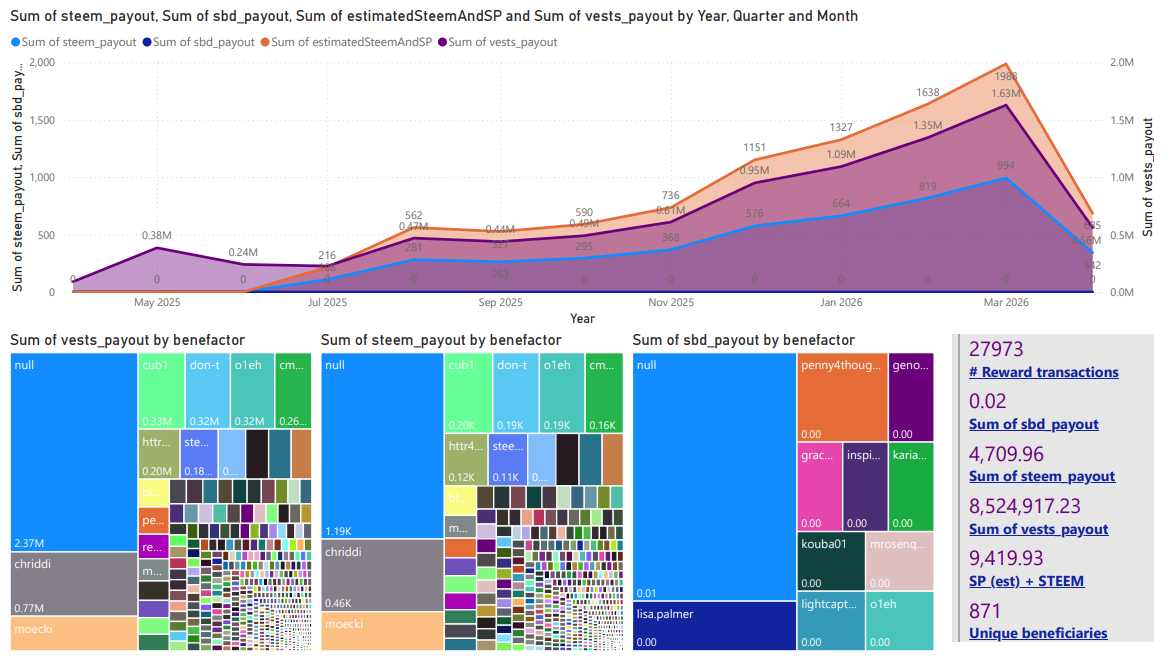
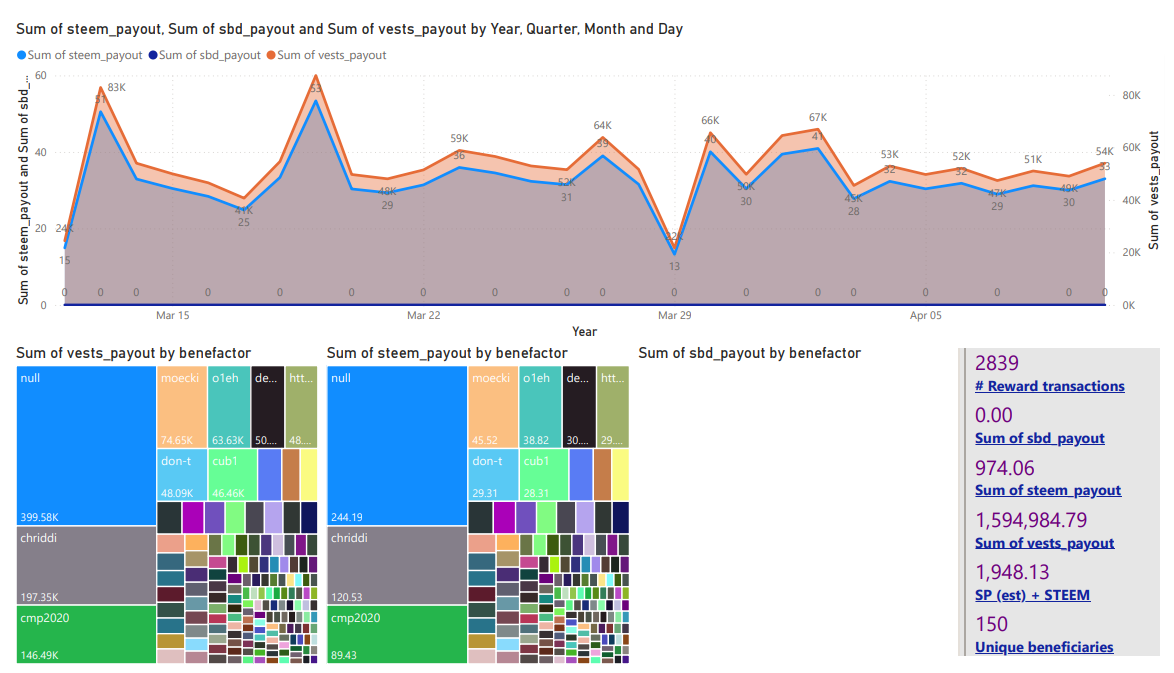
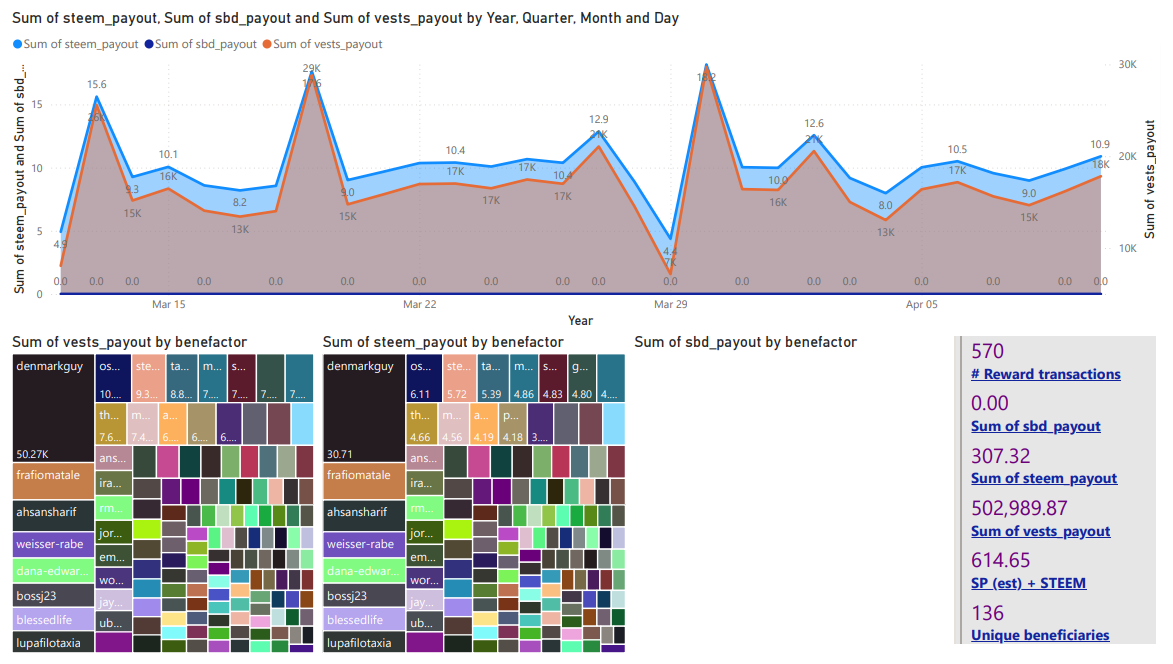
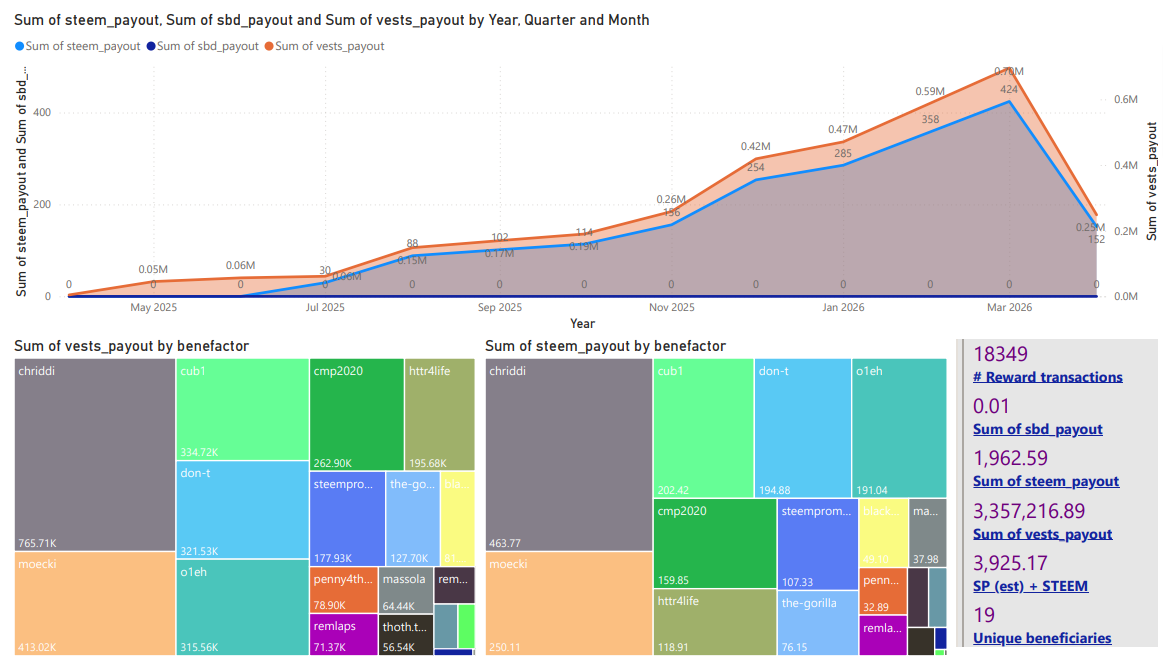
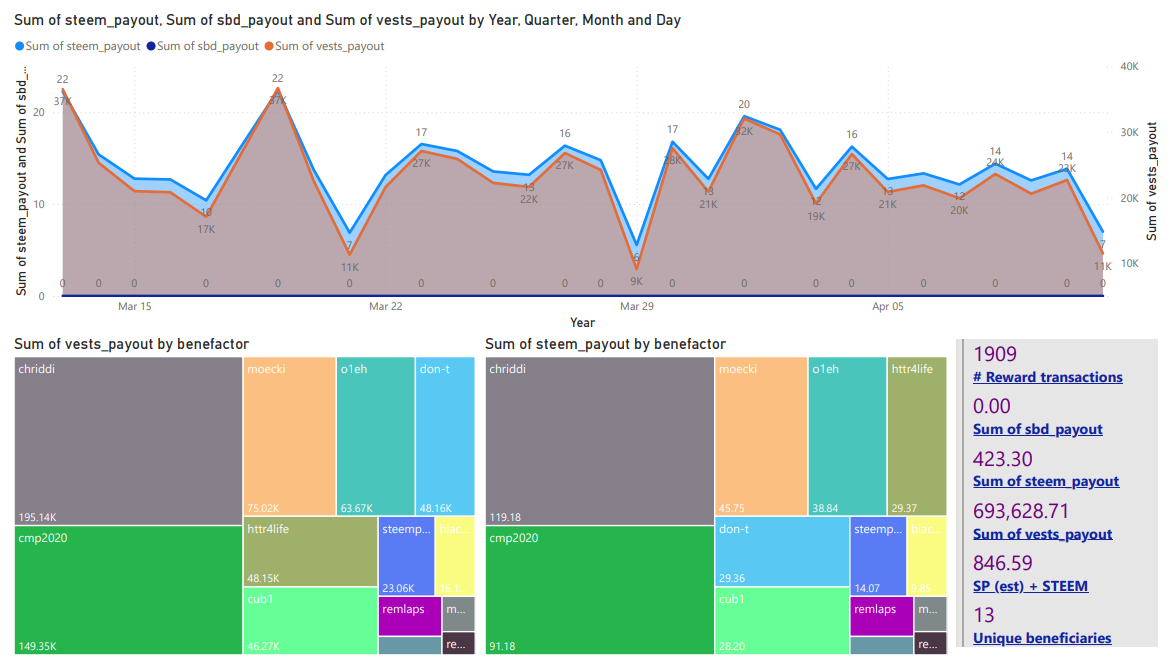
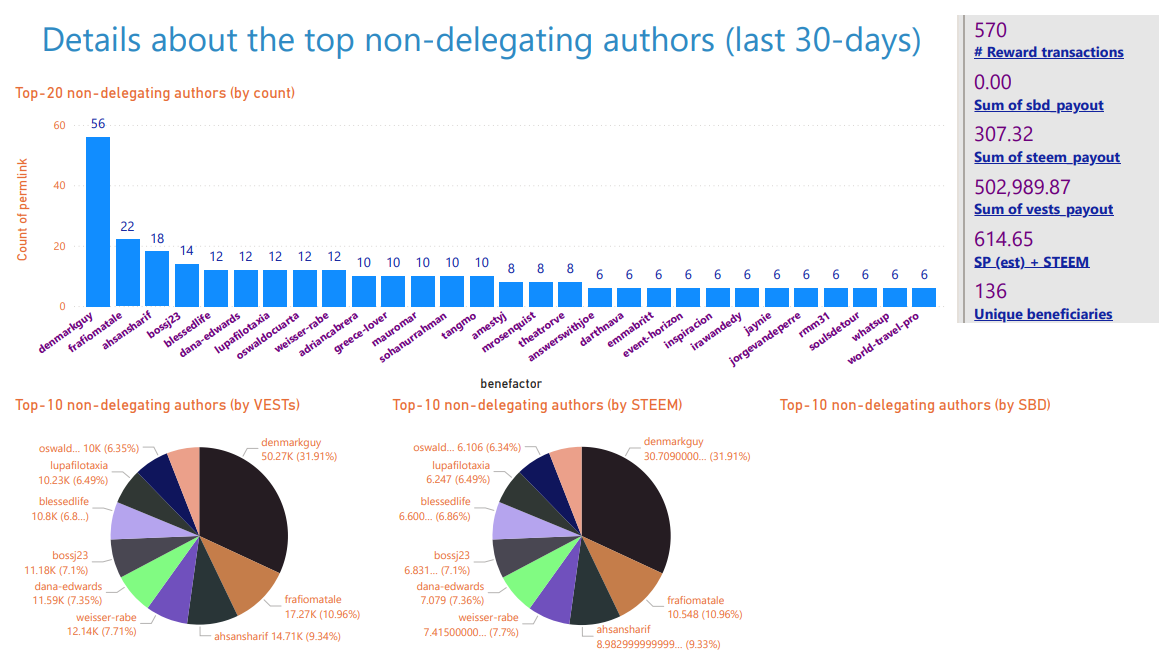
In the last 30 days, as a result of Thoth beneficiary settings, the blockchain has distributed 614 STEEM to 136 authors, 847 STEEM to 13 delegators, and it has burned 488 STEEM. The @thoth.test account has collected 698 SP in curation rewards.
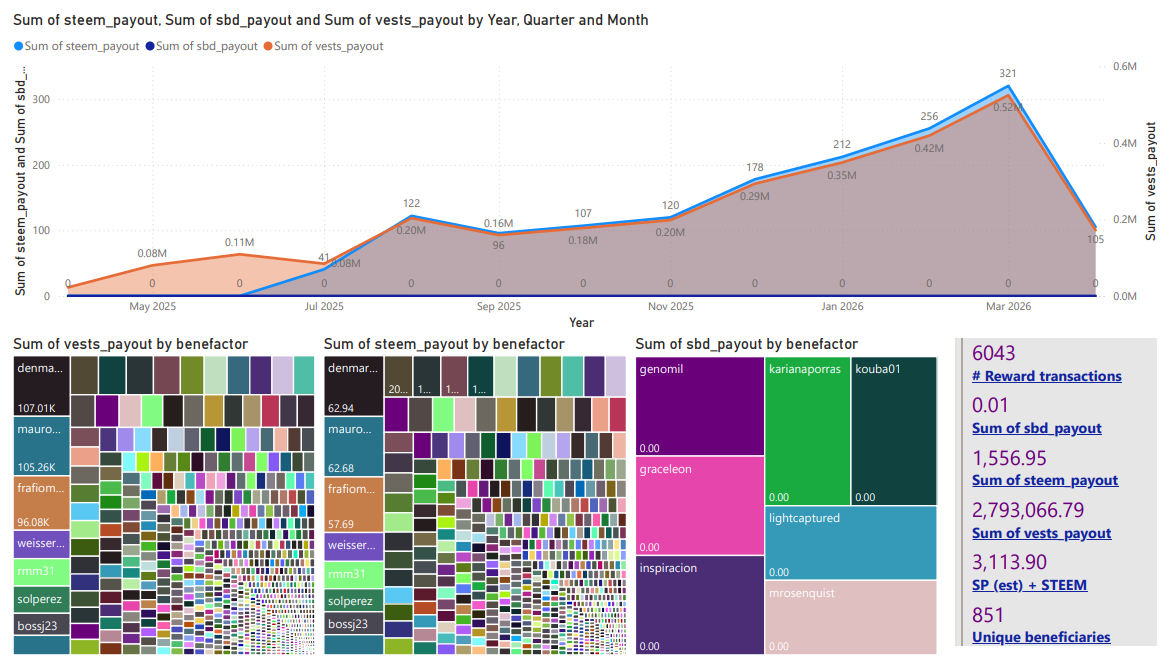
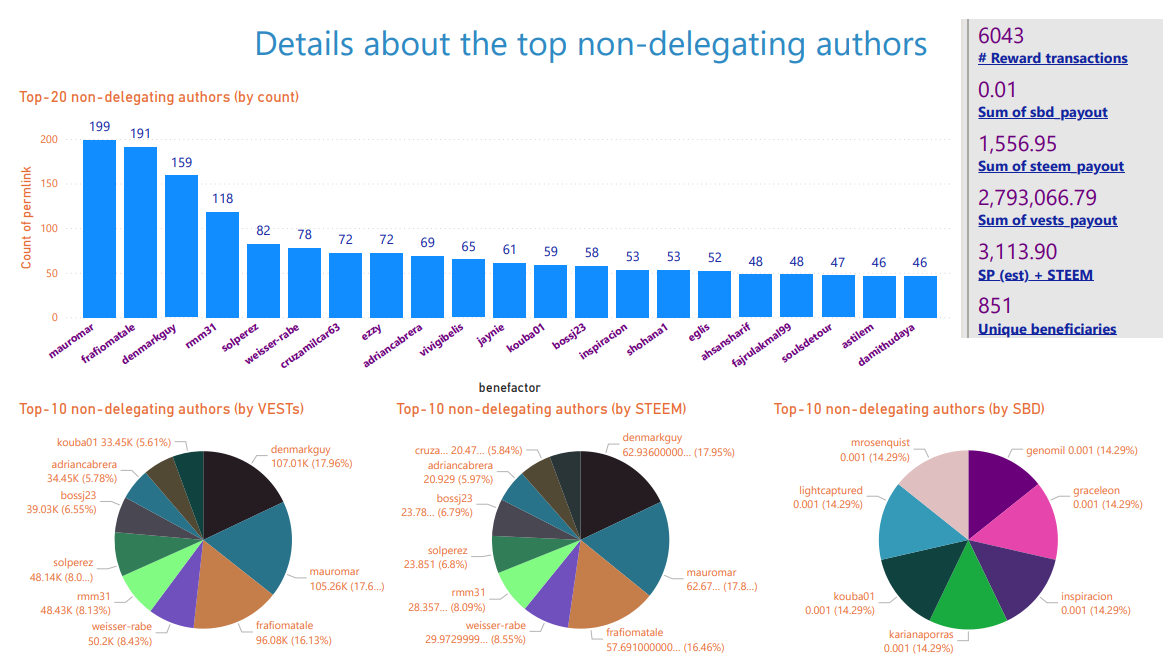
Since the project launch, the blockchain has used Thoth beneficiary settings to distribute 3,113 STEEM to 851 authors, 3,925 STEEM to 19 delegators, and it has burned 2,380 STEEM. The @thoth.test account has collected 2,988 SP in curation rewards.
Here are summary tables with estimates:
Summary of PowerBI visuals
| All time | 30 days | |
|---|---|---|
| Total beneficiary payouts (STEEM * 2 ) | 9,419 STEEM | 1,948 STEEM |
| Burned beneficiary rewards ( STEEM * 2 ) | 2,380 STEEM | 488 STEEM |
| Author beneficiary rewards ( STEEM * 2 ) | 3,113 STEEM | 614 STEEM |
| Delegator beneficiary rewards ( STEEM * 2 ) | 3,925 STEEM | 847 STEEM |
| Number of unique non-delegating author beneficiary accounts | 851 | 136 |
| Number of unique delegator beneficiary accounts | 19 | 13 |
@thoth.test info from SteemWorld
| All time / Current | 30 days / Comment | |
|---|---|---|
| Curation Rewards | 2,988 | 698 |
| Total Delegated SP | 123,181 | n/a |
| Owned SP or Non-beneficiary delegated SP | 41,024 | These delegating accounts opted out of FAIRD beneficiary selection. |
| SP from beneficiary-eligible delegators | 87,991 | These delegators are included in FAIRD beneficiary selection. |
And here are the updated visuals
Note that the "all time" charts have all been zoomed out to the monthly level, so the numbers for April are currently incomplete. March is the last month with complete data.
All rewards / all time
All rewards / 30 days
Non-delegating authors / all time
Non-delegating authors / 30 days
Delegators / all time
Delegators / 30 days
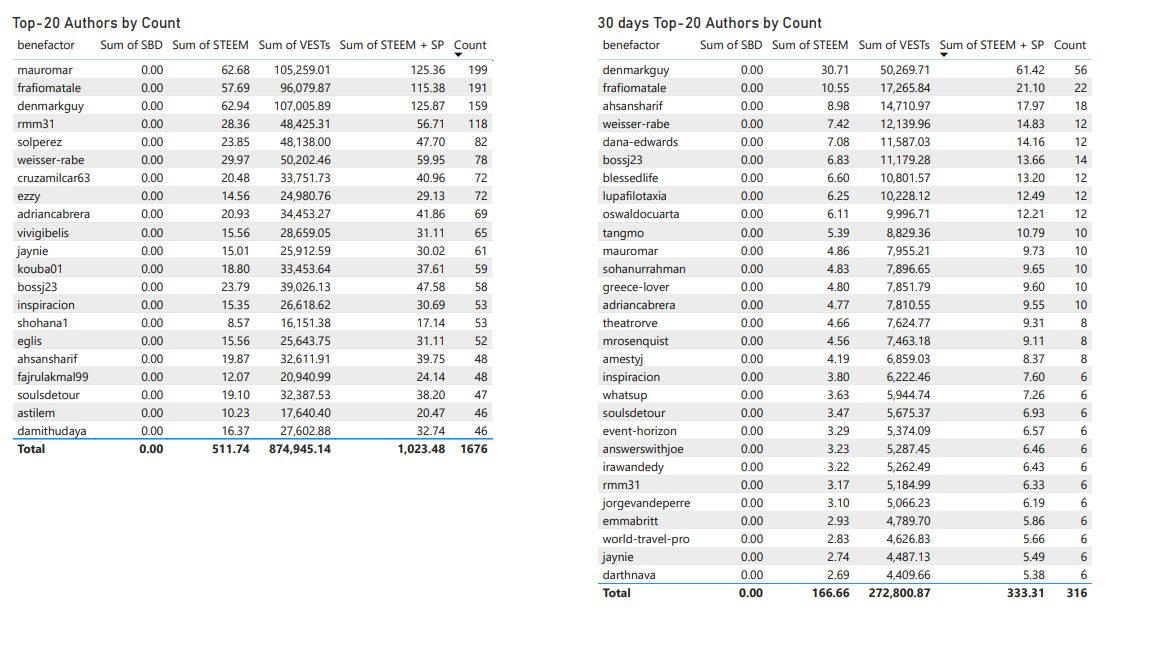
Details about beneficiary rewards to the top authors (by count) / all time
Details about beneficiary rewards to the top authors (by count) / 30 days
More details about rewards to delegators (now sorted by count)
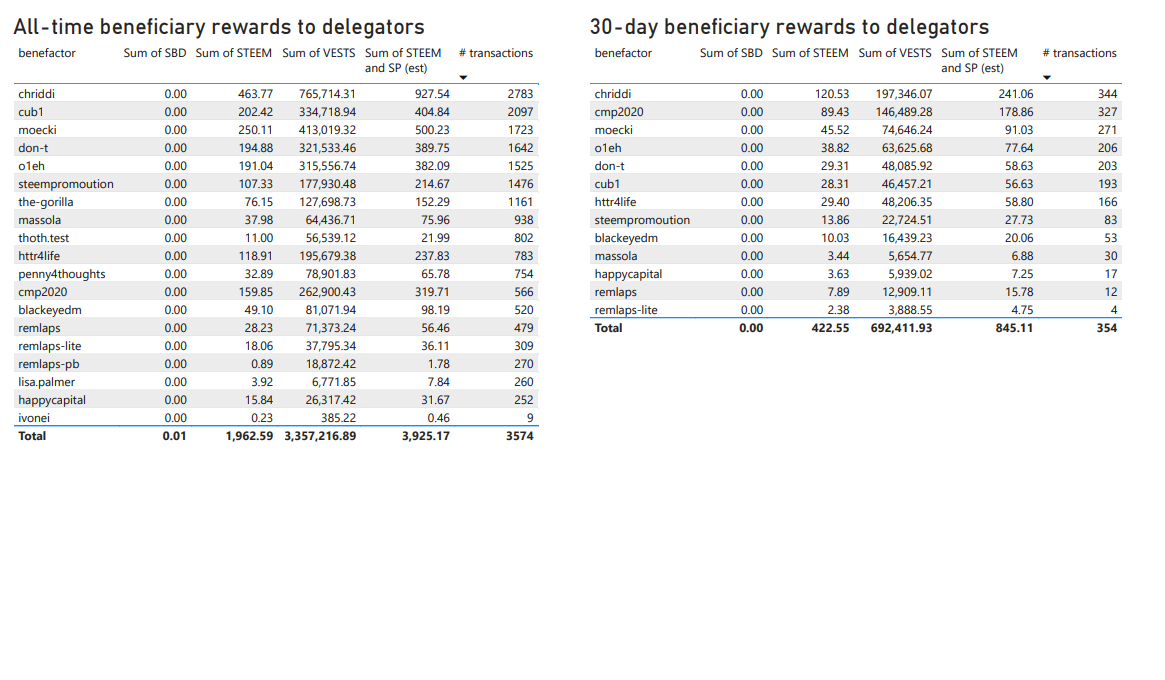
Note: The rewards here to remlaps and remlaps-lite were actually as authors - not delegators, but I don't have a way to identify that in the reporting.
More details about rewards to the top authors (by count)
Conclusion / Acknowledgements
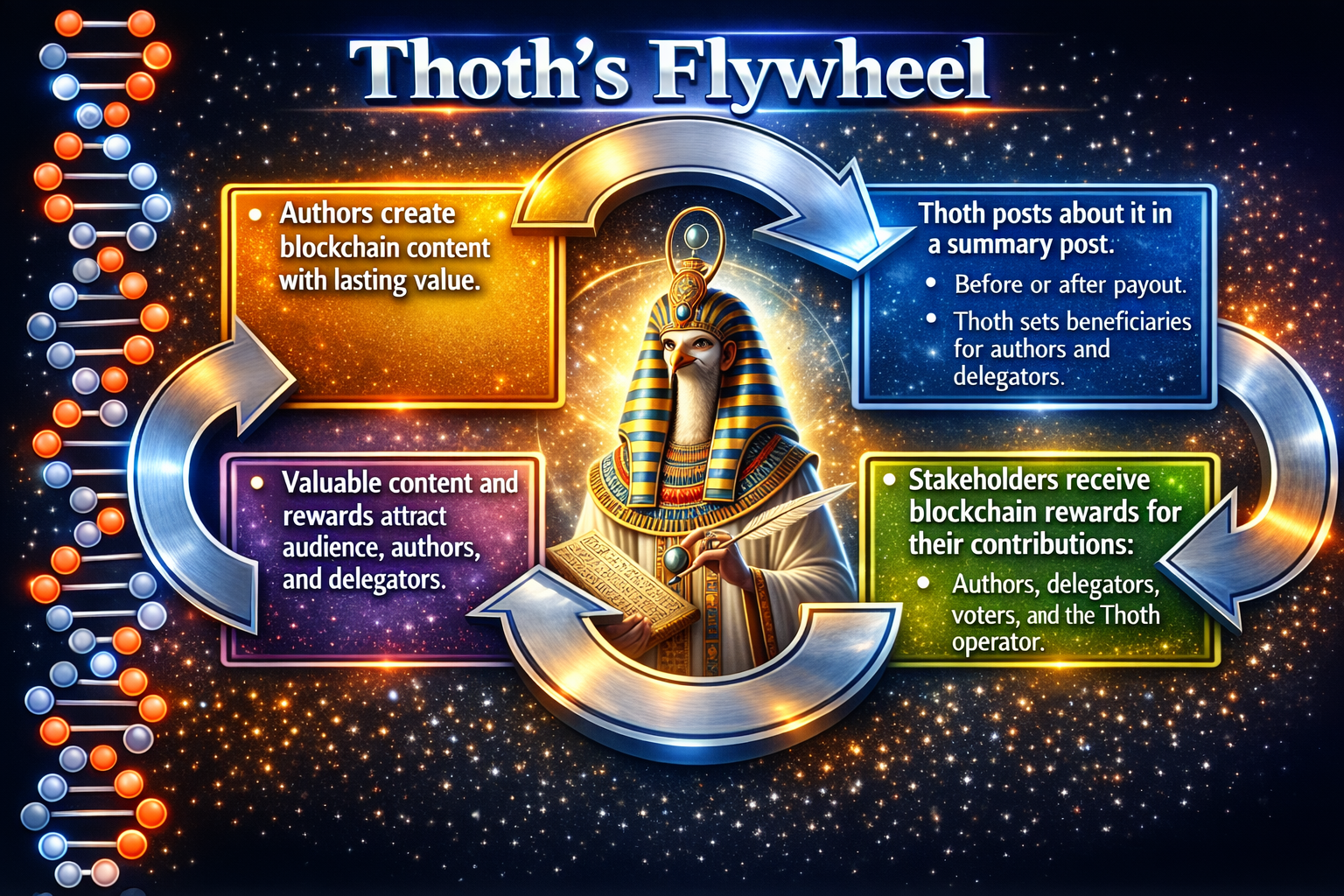
Image by AI
As always, let me start by thanking the content creators, delegators, and voters who make this possible. It is becoming clear to me that Thoth is showing how Steem's incentives can be arranged in a way that each participant's short-term incentives and long term-incentives are in agreement. This demonstration wouldn't be possible without help from all of these contributors.
I made some pretty significant updates to Thoth's selection algorithm this month in an effort to provide more variety to the posts and authors that get included without compromising on the attractiveness of the posts that are selected. It's interesting, therefore, to see that the number of unique authors increased from 128 to 136 during a 30-day window, and the overall number of included authors increased from 826 to 851. I think this suggests that the changes are having their desired effect (although improvement is still needed).