The Aburi Accord: Nigeria’s Lost Chance for Unity
The Aburi Accord was a significant peace initiative in Nigeria’s history, aimed at resolving the political and military tensions that eventually led to the Nigerian Civil War (1967–1970). The agreement was reached in January 1967 in Aburi, Ghana, during a meeting between Nigerian military leaders, including General Yakubu Gowon, Head of State, and Lieutenant Colonel Chukwuemeka Odumegwu Ojukwu, the Military Governor of the Eastern Region.
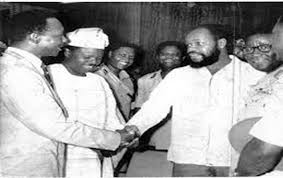
Nigeria at the time was deeply divided following a series of military coups in 1966, as well as ethnic violence, particularly against Igbo people in the Northern Region. These events led to widespread distrust and fears of marginalization, especially in the Eastern Region. In response to escalating tensions, leaders met in Aburi to find a peaceful and unified solution to the crisis.
The discussions at Aburi produced agreements focused on decentralizing power and granting greater autonomy to Nigeria’s regions. It was proposed that the federal government would become less centralized, with more authority given to regional governments over their own affairs, including control of resources and security. The accord was seen as a compromise that could preserve national unity while addressing regional concerns.
However, the implementation of the Aburi Accord became a source of conflict. While Ojukwu and Eastern leaders interpreted the agreement as creating a loose confederation, the federal government later issued decrees that appeared to contradict this understanding, maintaining stronger central authority. This disagreement led to a breakdown in trust between both sides.
The failure to fully implement the Aburi Accord contributed directly to the secession of the Eastern Region, which declared itself the Republic of Biafra in May 1967, triggering a brutal civil war. The conflict resulted in significant loss of life and humanitarian suffering.
In conclusion, the Aburi Accord represents a missed opportunity for peaceful resolution in Nigeria. It highlights how differing interpretations, lack of trust, and failure to honor agreements can escalate conflicts rather than resolve them.
🎉 Congratulations!
Your post has been upvoted by the SteemX Team! 🚀
SteemX is a modern, user-friendly and powerful platform built for the Steem community.
🔗 Visit us: www.steemx.org
✅ Support our work — Vote for our witness: bountyking5