Gellért Hill: Budapest’s Original Big Brother Watching the City
If you stand on top of the famous Gellért Hill in Budapest today, it feels peaceful. Tourists take selfies with the Liberty Statue, couples admire the Danube, runners climb the steep paths, and people simply enjoy one of the best panoramic views in Europe.
But between 1850 and 1854, the hill had a very different purpose.
Back then, the Citadel on top of Gellért Hill was basically the “Big Brother” of Budapest.
Not metaphorically. Quite literally.
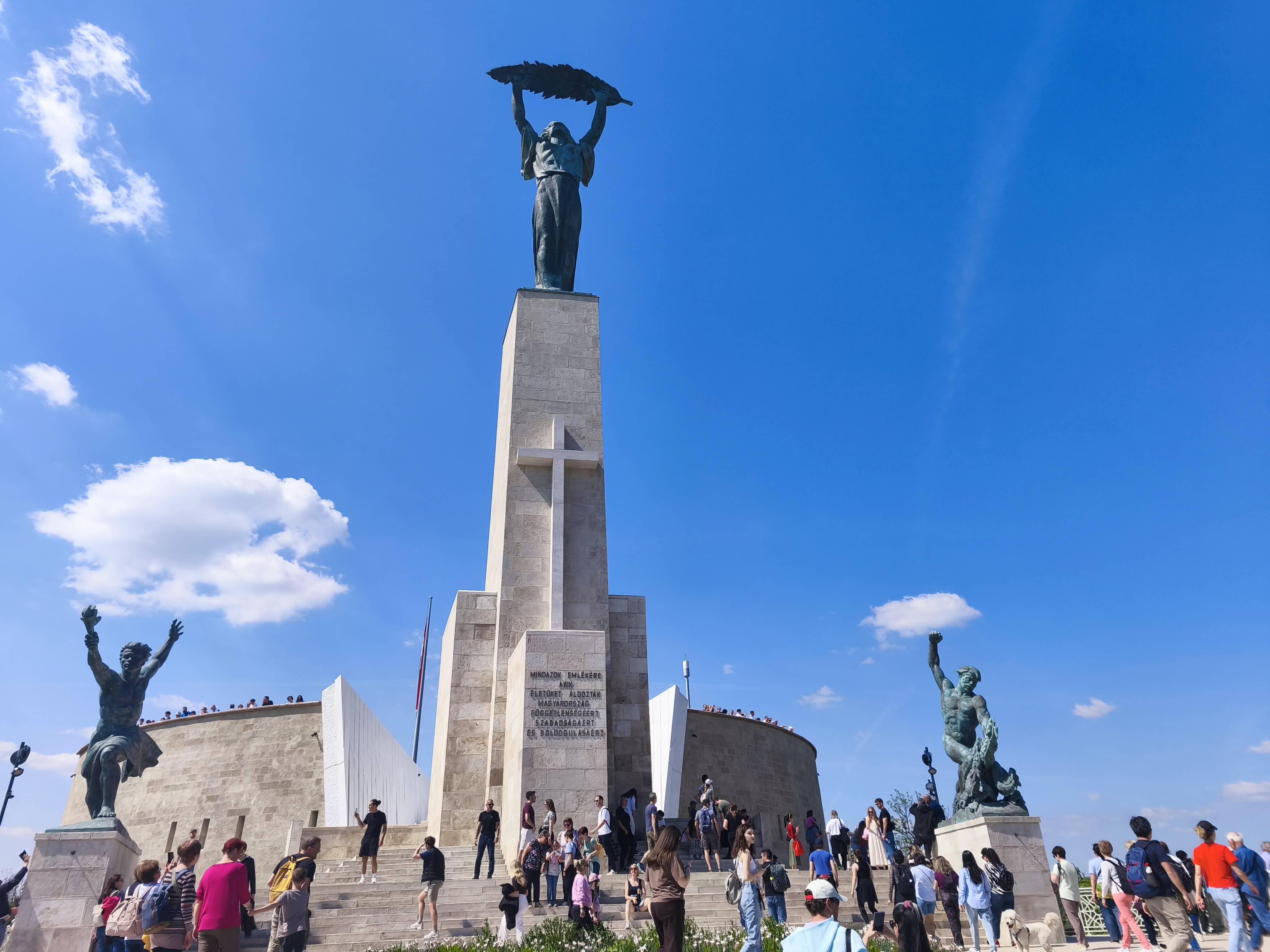
The giant fortress was built by the Habsburg rulers after the Hungarian Revolution of 1848–49, when Hungary tried to fight for independence from the Austrian Empire. The revolution failed, and the Austrian emperor decided that Budapest needed a very clear reminder of who was in charge.
So what did they do?
They built a huge military fortress directly above the city.
Not to defend Budapest from foreign enemies.
But to control Budapest itself.
For more information about visiting the hill and the Citadel today, check the official guide to Gellért Hill in Budapest.
A Fortress Pointing Its Cannons at the Citizens
The Citadel was completed around 1854, and it was designed in a way that made the message impossible to misunderstand.
The cannons pointed toward Pest.
Toward the people.
Imagine waking up every morning, looking up at the hill, and seeing a giant fortress above your city built by a foreign empire after crushing your revolution.
That is not exactly subtle political communication.
The Austrians stationed soldiers there permanently, and the Citadel became a symbol of oppression for many Hungarians. It was less about military defense and more about psychological pressure.
A 19th-century surveillance system.
No cameras.
No microphones.
No internet tracking.
Just soldiers, cannons, and a fortress towering over the population.
The Ultimate Power Move
The location was genius from a military perspective.
From Gellért Hill, you can oversee huge parts of Budapest and the Danube River. Even today, the view is breathtaking. In the 1850s, controlling that hill meant controlling movement, trade, transportation, and the atmosphere of the city itself.
It was the imperial equivalent of saying:
“We are watching you.”
And everyone understood it.
The irony is that modern tourists now happily walk around the exact same place that once represented fear and domination. People eat ice cream there. They drink coffee. They post sunset photos on Instagram.
History changes the emotional meaning of places.
From Symbol of Fear to Symbol of Freedom
Over time, the Citadel lost its military importance. Hungary eventually gained more autonomy within the Austro-Hungarian Empire, and the fortress slowly became more of a historical monument than a real instrument of control.
Today, the Liberty Statue standing nearby completely changes the atmosphere.
Instead of imperial domination, the hill now symbolizes survival, freedom, and the incredible history of Budapest itself.
And honestly, that transformation is fascinating.
A place originally built to intimidate the city eventually became one of the places people visit to fall in love with the city.
Not bad for an old fortress designed as the 1850s version of Big Brother.
Upvoted! Thank you for supporting witness @jswit.