Blockchain Technology in Logistics Management and Global Trade Optimization
Blockchain technology is one of the greatest digital innovations in today's world. It is changing many industries, including banking, healthcare, education, agriculture, and transportation. One of the most crucial sectors where blockchain is having a significant impact is logistics and international commerce. Logistics management refers to the management of the movement, storage, and planning of goods from one place to another. International commerce is the trading of goods and services between different nations. Both international trade and businesses are increasing, and businesses require faster, safer and more reliable systems. I think that blockchain technology is a great solution to make the flow of goods around the world better.
Blockchain is a digital system for securely and transparently recording information. The information is encoded in blocks, each of which is linked to the next one, creating a chain of blocks. Once information is placed into the blockchain it is extremely hard to alter or delete. This gives everyone involved access to the same information and thus provides the system with trustworthiness. Whereas one entity can rely on another for data storage, blockchain enables multiple parties to share and validate the same information. This helps minimize errors and boosts trust in the business.
In logistics management, there are numerous enterprises that collaborate with each other until products reach the final consumer. It involves important stakeholders such as manufacturers, suppliers, transport firms, warehouses, customs officials, sellers and buyers. These parties often employ different computer systems, which makes it challenging to disseminate correct information. Documents can be postponed, lost or even altered, without authorization. Blockchain addresses many of these challenges, by creating a single, secure, shared record for everyone. Enabling all involved to understand the location of goods and what is occurring at each stage on the journey.
Better transparency is one of the benefits of blockchain. Each product movement from manufacturing to customer is tracked. This allows a full traceability of the product. If for instance, food gets contaminated, companies can quickly find the source of the contamination and can scrap only the affected food. I believe that this will save time, protect the customer as well as save the business some money.
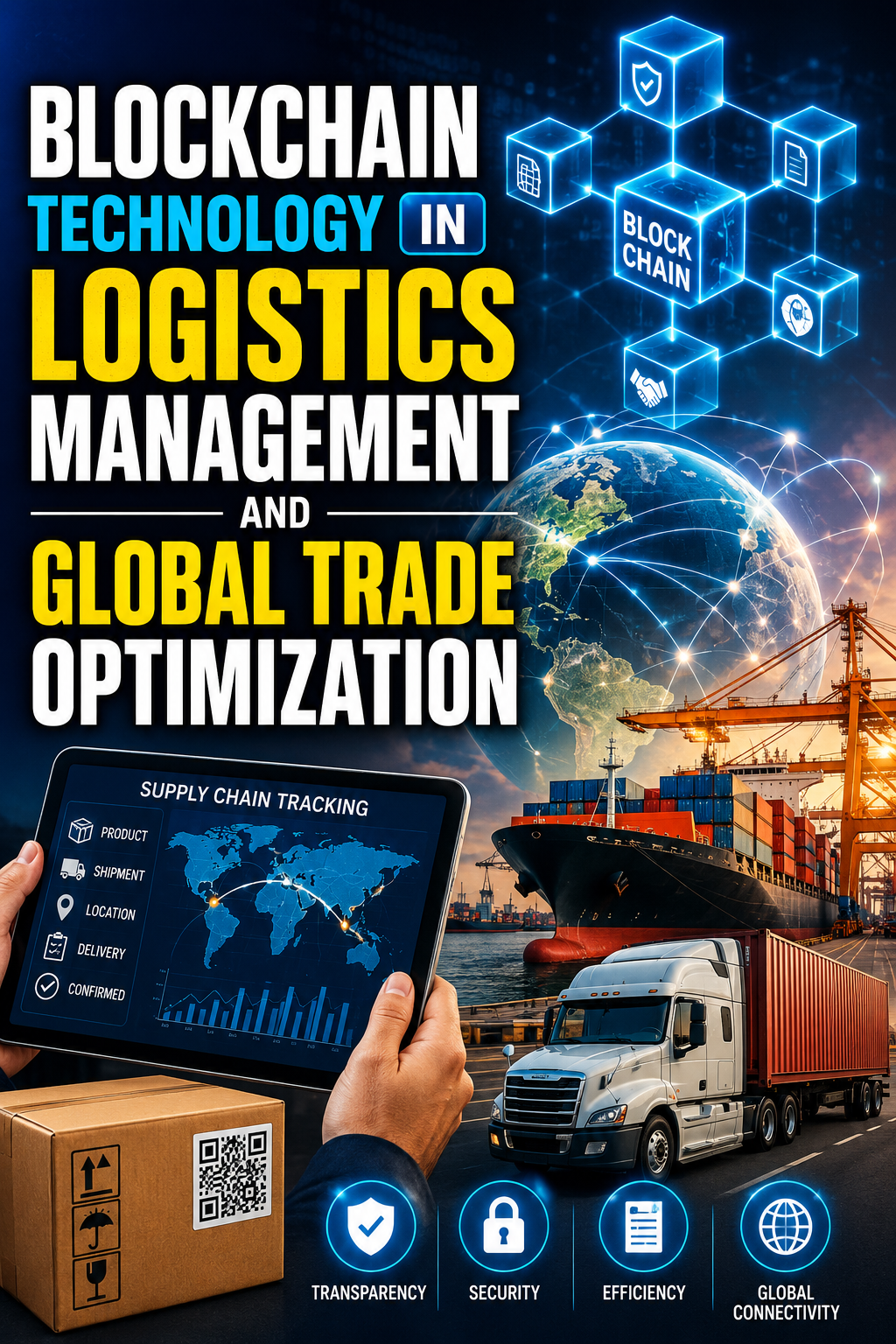
There is another significant advantage as well: the security benefit. Fraud is very prevalent in international commerce. Some even forge documents, alter shipping information or swap out original products with fake copies. All transactions are recorded permanently and can't be easily changed, reducing these risks. The data is encrypted and secured with a high level of security, making it extremely hard for anyone to change the data or hack into the system. This means that businesses can be confident in the data they are provided.
In addition to that, blockchain technology also helps to minimize paperwork. Typically, there are numerous documents used in international trade, including invoices, shipping documents, customs forms, insurance papers, and certificates of origin. It can take days or weeks to process these documents by hand. These documents can be stored and shared digitally with authorized individuals via blockchain. This can enhance the efficiency of business operations and lower administrative costs. Businesses also save money by utilizing less paper and minimize human errors.
Another crucial aspect of blockchain technology is smart contracts. A smart contract is a digital contract which executes specific actions when certain conditions are fulfilled. For instance, payment may be made automatically when a product or product is safely delivered to its destination. This eliminates the need for any delays and decreases the disagreements between the buyers and sellers. I feel smart contracts are able to make business transactions quicker, simpler and more efficient.
The blockchain is also enhancing global commerce by streamlining customs clearance. Imported goods go through customs where the documents are examined and shipments are verified. Goods can be held on the dock for many days if the documents are not completed or correct. With blockchain, customs officials can easily access accurate information, thereby minimising delays and enabling products to reach customers in a timely fashion. This will enhance trade and business relations in the international market.
Blockchain technology also has a number of benefits for small and medium-sized businesses. Once, many small companies would not be able to compete in global markets since they did not have the high cost tracking systems. Blockchain offers cheap and dependable digital documents and assists these enterprises in establishing trust with overseas customers and business associates. This helps to grow further and gives an opportunity to more companies to be involved in international trade.
Although blockchain technology has gained a lot of benefits, there are also some challenges. However, many businesses are not completely familiar with it. Establishing blockchain systems can be high cost, involving investments in technology and training. However, the laws and regulations are different in different countries, which means implementation is more challenging on an international level. Besides, some blockchain networks are energy intensive, and newer systems are energy efficient. Such issues highlight the ongoing evolution and need for development in the blockchain space.
A number of big firms are already leveraging blockchain to enhance their supply chain. They use it to keep tabs on products, verify deliveries, prevent fraud, and enhance communication with suppliers and customers. Governments are also looking into blockchain to streamline customs processes and global trade. With technology evolving further, there is an increasing number of organizations that will likely embrace blockchain in the coming years.
To wrap up, blockchain technology is revolutionizing the optimization of logistics management and global trade. It offers transparency, security, quicker document processing, enhanced product monitoring, and improved trust between business partners. It also helps to prevent fraud, cut costs and facilitate international trading. While there are still obstacles to overcome, including high implementation costs, lack of understanding, and regulatory concerns, the future of blockchain is promising. I think that more and more enterprises and governments will adopt this technology and that each trade in the world will be quicker, safer and more reliable. Blockchain will revolutionize the way businesses conduct themselves and manage their logistics in the future, and it will be essential for their growth.
https://x.com/i/status/2077470650839511115
https://x.com/i/status/2074764888006709589
https://coinmarketcap.com/currencies/pussfi/