Blockchain Technology and the Reinvention of Digital Voting Systems
One of the most vital innovations in today's digital world is blockchain technology. It is a system that keeps the information in Secure and transparent manner. Blockchain technology has found applications in various sectors such as finance, healthcare, education, and government services. Digital voting systems is one area where blockchain could have a significant impact. I strongly believe that the blockchain technology will revolutionize how everyone votes and enhance democracy globally.
Many challenges are faced in the traditional voting systems. Some of these challenges involve vote manipulation, human error, lack of transparency, and delayed vote counting. Sometimes, individuals are skeptical of the outcomes of an election because they felt the election was not fair. While digital voting technology has been developed to address some of these issues, it also presents dangers of hacking, data stealing and system failures. This is where blockchain technology really comes in handy.
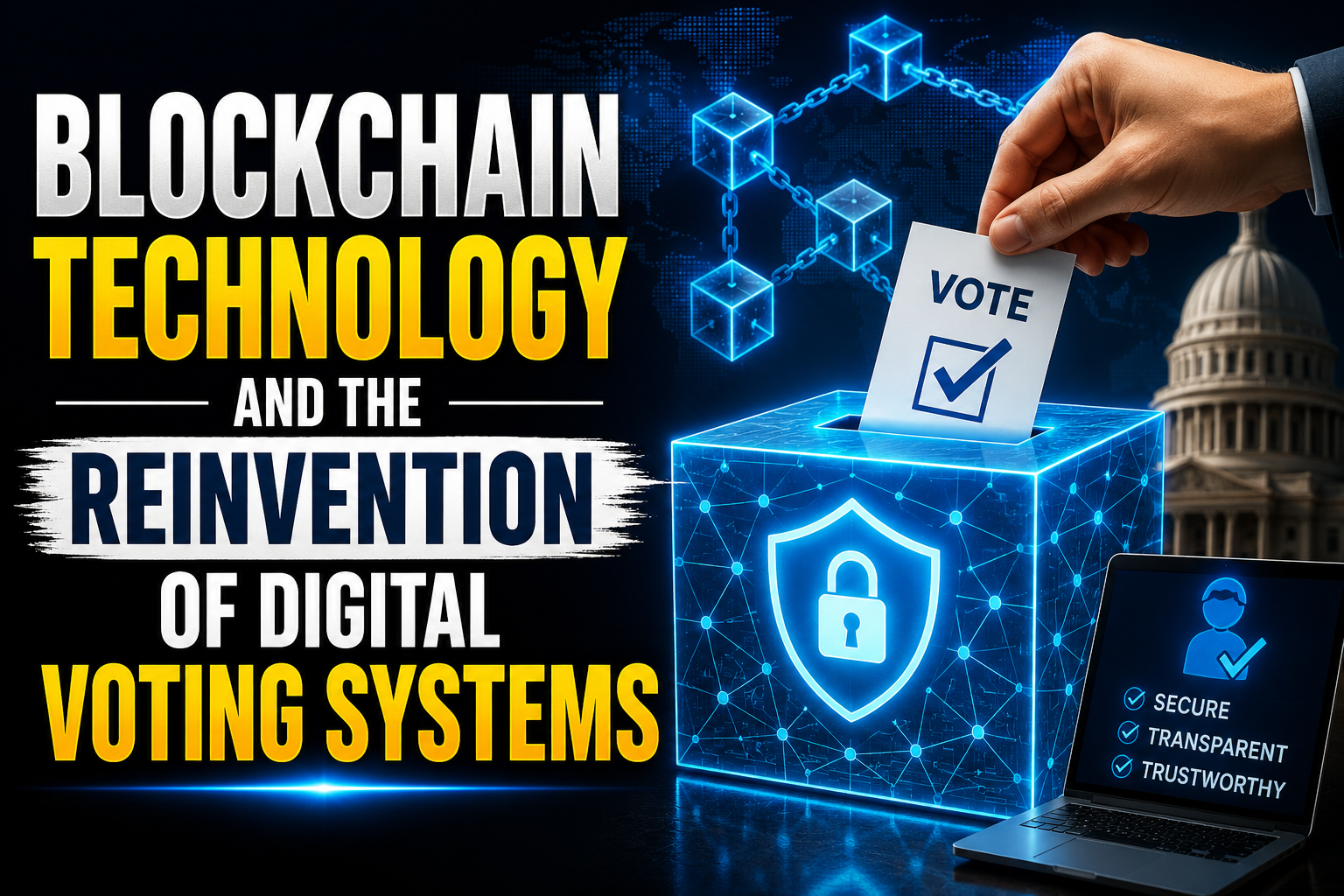
Blockchain is like a digital record book that's not owned by any one central authority. That is, information is not stored on a single server but rather on multiple computers. After the vote is taken and recorded on the blockchain it is hard to edit and delete. This feature ensures that voting records are safe and reliable. This is one of the best things about the blockchain voting system, in my opinion.
Another benefit of blockchain voting is transparency. All votes can be checked and the person's identity is not disclosed. This helps maintain voter privacy while ensuring that every vote is counted correctly. Official, observers, and citizens can also observe the voting process more easily. Consequently, voters' trust in the electoral process can be enhanced.
Blockchain technology can also enhance the convenience of voting. Individuals can cast ballot that is safe at their homes through using computer systems or smartphones. This can increase voter turnout, particularly for those who are not able to vote because of their disability or are unable to get to polling stations, or because they live in a remote area where voters are unlikely to go. Voters' turnout plays a vital role in reinforcing democratic systems.
Although it has numerous advantages, blockchain voting has its own set of challenges. Governments need to invest in technology infrastructure, cyber security and public education. Not all have the opportunity to use digital devices or the internet. Technical problems and systems management are also factors of concern.
Overall, blockchain technology can revolutionize digital voting systems by increasing their security, transparency, and accessibility. While there are some obstacles that need to be overcome, I think that in the future, blockchain can help to make elections more fair, more trustworthy.
🎉 Congratulations! Your post has been manually curated by @upmax. Keep creating and sharing high-quality content on Steem. We look forward to seeing more of your great work !
0.00 SBD,
12.96 STEEM,
12.96 SP