The Influence of Cryptocurrency Mining on Global Energy Consumption and Environmental Sustainability
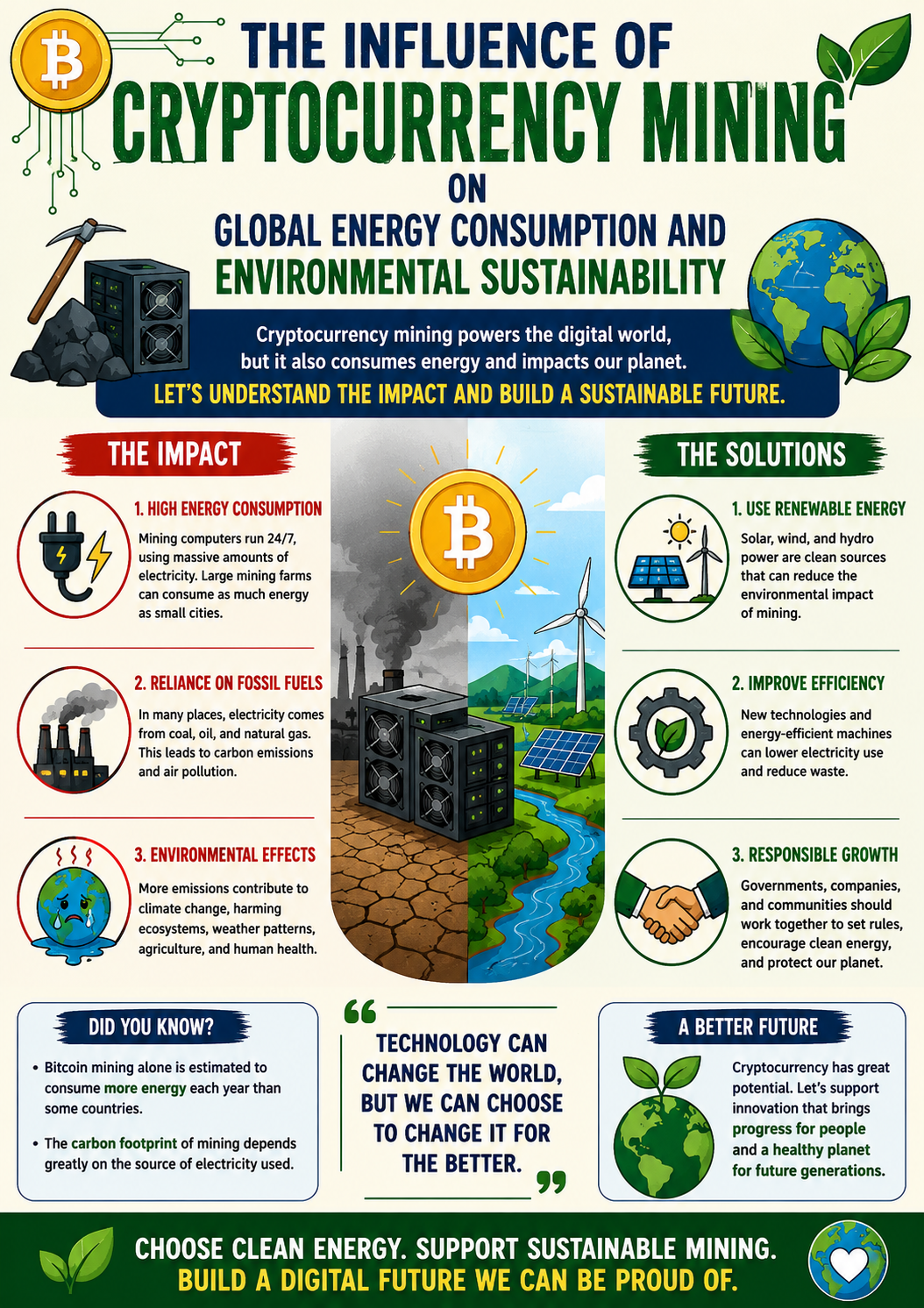
One of the most discussed technological advancements of the past few years is cryptocurrency. People can send and receive money without the involvement of the traditional banking system through digital currencies like Bitcoin. Many cryptocurrencies have a process called cryptocurrency mining behind them. Mining is the activity of using a computer to solve complex math problems and confirm transactions and add new blocks to a blockchain network. This process ensures the security of the cryptocurrency system, but it also contributes to energy consumption and environmental sustainability.
The high electricity consumption is one of the primary reasons for the concern regarding cryptocurrency mining. Mining machines are always running, 24 hours a day, vying against rewards. The competition is increased as more people join the mining process, and more computing power is required. This contributes to the global increase in electricity consumption. In certain nations, big mining farms use as much power as little towns or cities. As a result, cryptocurrency mining has emerged as a significant issue in the debate regarding global energy consumption.
Another environmental issue is the location of the electricity generation. Electricity is still produced in many areas using fossil fuels like coal, oil and natural gas. These energy sources are the source of pollution and CO2 emissions when mining operations rely on them. Climate change is caused by higher levels of carbon emissions and impacts weather patterns, ecosystems, agriculture, and human health. For this reason, many environmental experts have raised concerns on the sustainability of the use of energy intensive cryptocurrency mining.
But not everything about cryptocurrency mining is bad. A few mining companies are starting to utilize renewable energy resources like solar energy, wind energy and water power. These are cleaner sources of energy which could help minimize environmental impacts associated with mining. In some instances, renewable energy sites are situated near mines because the renewable energy is not being utilized. This demonstrates that technological innovation is a way to mitigate environmental issues.
I think the future of cryptocurrency ought to be a harmony of technological development and ecological duty. While the digital currencies have numerous advantages, their creation must not be done at the cost of the environment. To promote the use of renewable energy and more efficient mining practices, governments, technology companies and cryptocurrency communities can collaborate.
Overall, cryptocurrency mining has a significant impact on global energy usage and sustainability. It is a growing consumer of electricity, which represents a challenge for the environment particularly under the use of fossil fuels. Concurrently, renewable energy is an avenue that shows promise for a more sustainable future. As I keep learning more about technology and the environment, I see that there is a need to be mindful about the innovation process so as to ensure that such progress is beneficial both for people and planet.