Television Review: Sopranos (Season 4, 2002)
By any measure, the fourth season of The Sopranos (2002) represents a pivotal, if occasionally uneven, chapter in David Chase's landmark series. A viewer might discern a season preoccupied with the corrosion of foundations—familial, criminal, and psychological. Where earlier seasons established the show's revolutionary blend of mob procedural and domestic drama, Season Four interrogates the sustainability of Tony Soprano's duplicitous existence, asking whether the structures he has built can withstand the accumulating weight of betrayal, grief, and moral compromise.
Thematically, the season is dominated by the motif of debt—public, private, and existential. The premiere, For All Debts Public and Private, immediately establishes this preoccupation, situating the DiMeo family within a post-9/11 economic recession that even organised crime cannot evade. Tony's anxiety over securing his family's financial future, should he be imprisoned or killed, drives much of the season's plotting, from the lucrative but precarious Esplanade development scheme to his grooming of Christopher Moltisanti as a potential successor. Yet, these financial machinations are merely the external manifestation of a deeper, more personal accounting. Tony's ledger is written in broken promises: to Carmela, whose growing disillusionment culminates in the seismic marital rupture of the finale, Whitecaps; to his children, whose lives are scarred by his choices; and to himself, as his therapy with Dr Melfi reaches an impasse born of his own resistance to change.
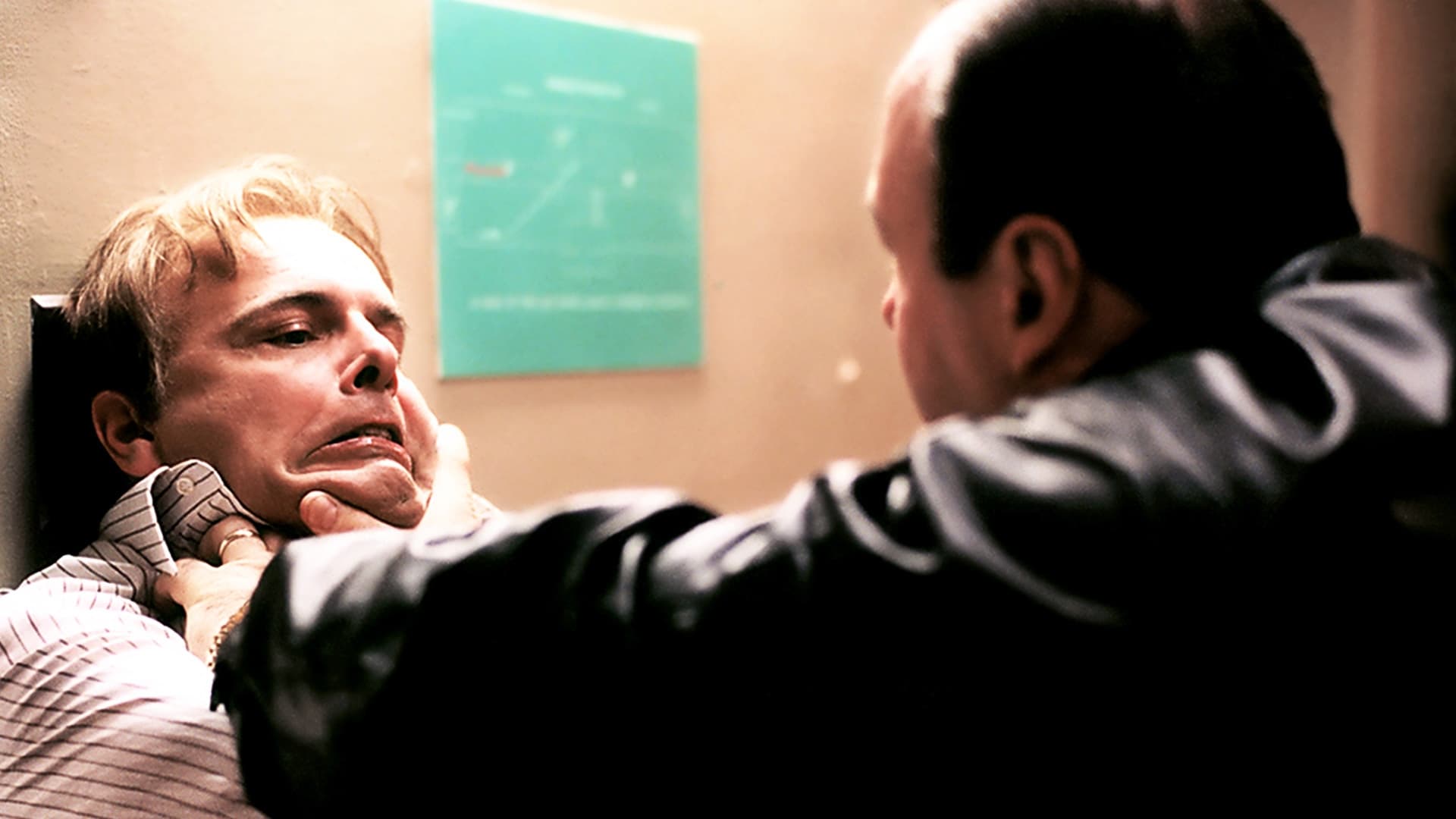
Character development remains the season's foremost strength, even when narrative momentum occasionally stalls. The arc of Ralph Cifaretto, portrayed with grotesque charisma by Joe Pantoliano, is a masterclass in sustained tension. From his early clashes with Johnny Sack over a cruel joke about Ginny's weight in The Weight, to his eventual, shocking murder at Tony's hands in Whoever Did This, Ralph functions as both a catalyst for chaos and a dark mirror to Tony's own capacity for violence. The episode of his demise is a pinnacle of the series, featuring audacious tonal shifts—from dark comedy to Greek tragedy to Coen Brothers-esque farce—and its refusal to offer tidy moral catharsis. Ralph's death is not justice served, but a messy, impulsive act that leaves a void, underscoring the show's nihilistic worldview.
Equally compelling is the quiet, devastating evolution of Carmela Soprano. Edie Falco's performance, as highlighted across multiple reviews, anchors the season's emotional core. Carmela's journey from complicit spouse to strategic adversary is meticulously charted: her pursuit of financial independence through real estate, her calculated theft of Tony's cash in Mergers and Acquisitions, and her unspoken longing for Furio Giunta, whose own tragic restraint in Eloise offers a poignant counterpoint to Tony's brutish infidelities. The finale's marital confrontation is a tour de force, with Falco and James Gandolfini laying bare the corrosive resentment and fragile love that define their union. Carmela's weaponisation of decades of suppressed grievances ("I know you better than anybody, Tony, even your friends. Which is probably why you hate me") transforms the scene from domestic squabble into Shakespearean tragedy.
The season also deepens its exploration of secondary characters with remarkable nuance. Christopher Moltisanti's descent into heroin addiction, foreshadowed in earlier episodes, reaches a harrowing nadir in The Strong, Silent Type, where his intervention scene masterfully blends farce and horror. Michael Imperioli's raw, agonised performance, coupled with the eerie foreshadowing of his barbed critique of Tony's gluttony—a line that gained tragic resonance after Gandolfini's untimely death—elevates the subplot beyond mere cautionary tale. Adriana La Cerva's coerced collaboration with the FBI, meanwhile, provides a relentless source of dramatic irony and dread. Her desperate attempts to secure marital privilege in Watching Too Much Television, only to discover its legal limitations, underscore the show's commitment to denying its characters easy escapes.
However, the season is not without its missteps. Several episodes—Christopher, Everybody Hurts, and Mergers and Acquisitions among them—lean into didacticism, contrived coincidences, or tonal inconsistencies. The episode Christopher, which shifts focus from the eponymous mobster to a debate over Columbus Day, has ambition but also a heavy-handed dialogue that occasionally veers into "Very Special Episode" territory. Similarly, Paulie Walnuts' subplot involving his mother's integration into a retirement home in Mergers and Acquisitions oscillates uneasily between pathos and slapstick, undermining the episode's otherwise grounded tone. The season occasionally struggling to balance its expansive thematic ambitions with the tight narrative discipline that defined the show's finest hours.
Stylistically, Season Four continues to push the boundaries of television storytelling. The use of dream sequences—particularly Tony's Fellini-esque car ride and Lynchian mansion nightmare in Calling All Cars—adds a layer of surrealism that enriches the psychological portrait without resorting to exposition. The season should be commended for willingness to embrace brevity and atmospheric tension over plot-driven spectacle, with episodes like Calling All Cars prove that the most profound emergencies are often those simmering beneath the surface. This commitment to psychological realism over sensationalism is perhaps the season's most enduring legacy, influencing a generation of prestige dramas that followed.
In retrospect, Season Four of The Sopranos emerges as a necessary, if occasionally uneven, bridge between the series' explosive early seasons and the more introspective, fatalistic trajectory that would define its later years. It is a season about the cost of maintenance—the emotional labour required to sustain a lie, the financial manoeuvring to preserve an empire, the psychological toll of avoiding reckoning. The reviews collectively suggest that while not every episode achieves the heights of the show's zenith, the season as a whole deepens the series' central inquiry: can a man live a lie without the lie eventually consuming everything he holds dear?
The answer, as Whitecaps so brutally affirms, is a resounding no. The beachfront property Tony purchases as a symbol of legacy becomes, in the wake of his marital collapse, a monument to futility. The season concludes not with resolution, but with rupture—a fitting end for a narrative cycle built on the illusion of control. One might say the season leaves Tony "in a right pickle", but that understates the existential precipice upon which he now stands.
Ultimately, Season Four of The Sopranos rewards the patient viewer. Its pleasures are not always immediate; its critiques of systemic corruption, familial dysfunction, and moral ambiguity unfold with the slow, inevitable pressure of a rising tide. For those willing to engage with its complexities, the season offers a profound meditation on the debts we incur, the weights we bear, and the fragile façades we maintain in the hope of keeping chaos at bay. It is a testament to the series' enduring genius that, even in its more tentative moments, it never ceases to challenge, provoke, and haunt. As the reviews collectively affirm, The Sopranos in its fourth season remained not merely a television programme, but a cultural artefact of the highest order—a dark mirror held up to the contradictions of the American dream, and to the universal human capacity for self-deception.
(NOTE: All reviews can be accesed via this link.)
Blog in Croatian https://draxblog.com
Blog in English https://draxreview.wordpress.com/
InLeo blog https://inleo.io/@drax.leo
BTC donations: 1EWxiMiP6iiG9rger3NuUSd6HByaxQWafG
ETH donations: 0xB305F144323b99e6f8b1d66f5D7DE78B498C32A7