Television Review: The Sopranos (Season 1, 1999)
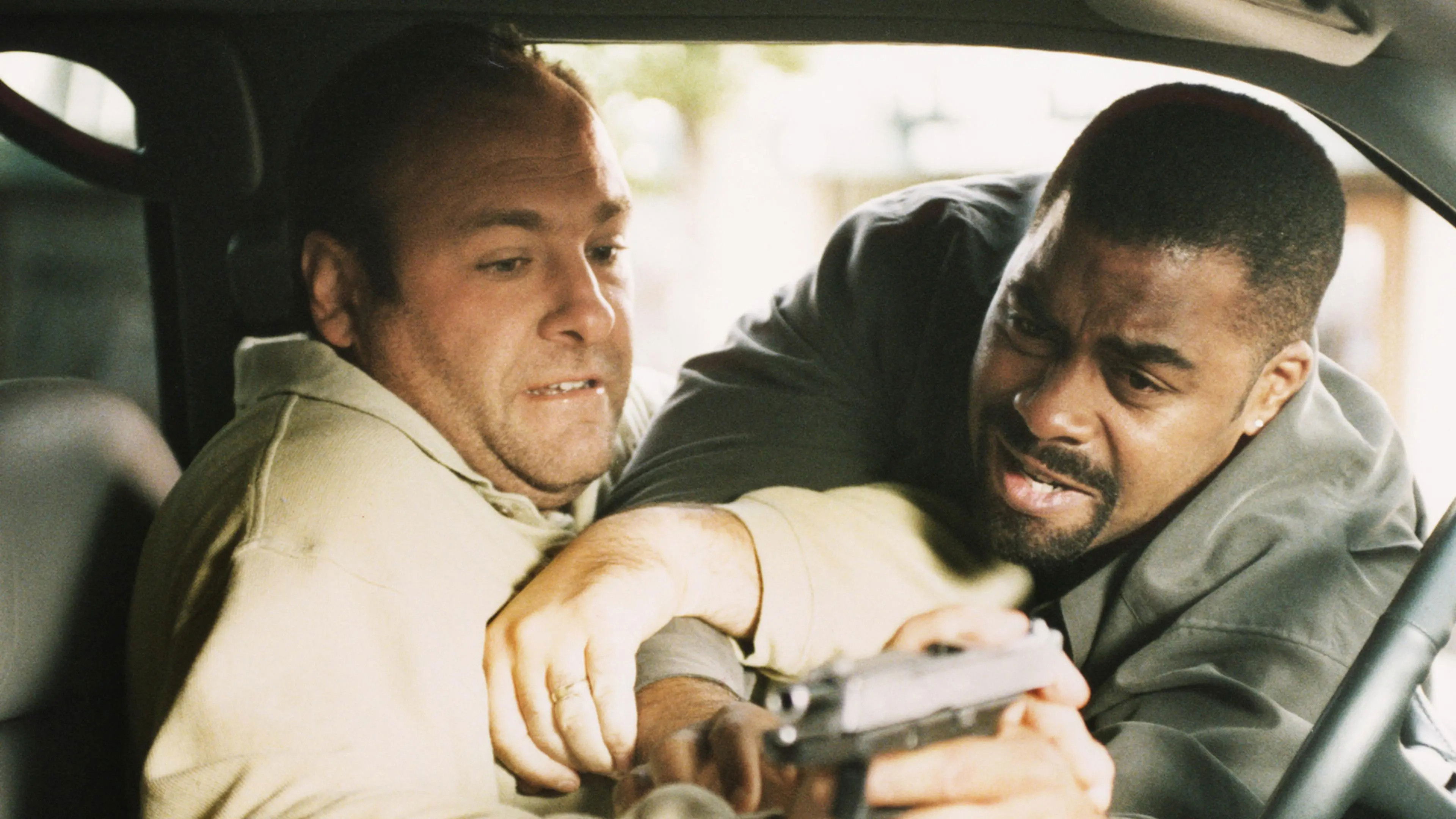
When The Sopranos first aired in early 1999, it arrived with a premise that threatened to be a mere gimmick: a middle-aged mob boss, Tony Soprano, suffering panic attacks and seeking therapy. However, as the first season unfolded over thirteen episodes, it became evident that David Chase and his team were not merely mining the novelty of a gangster on a psychiatrist's couch. Instead, they were constructing a complex, often uncomfortable exploration of American life, blending socioeconomic commentary, familial dysfunction, and graphic violence into a tapestry that would come to define the "Golden Age" of television. Season 1 is a triumph of character study, though it is occasionally marred by formulaic detours and uneven pacing.
The season begins with the Pilot (S1E01), a robust introduction that establishes the dualities inherent in Tony’s existence. Portrayed with commanding nuance by James Gandolfini, Tony is simultaneously a loving father and a ruthless killer. The episode deftly weaves the mundane with the menacing, from Tony's interactions with his manipulative mother, Livia, to the cold-blooded planning of a hit on a rival. The pilot succeeds in establishing the show's unique tone—mixing dark humour with the grim realities of organised crime—and sets a strong benchmark.
The early episodes attempt to find their rhythm within this new format. 46 Long (S1E02) maintains the show's formula, utilising the Bada Bing strip club as a backdrop for "sexposition" and introducing the socioeconomic commentary that would become a staple. However, it is in Denial, Anger, Acceptance (S1E03) that the show begins to flex its dramatic muscles more fully. The episode grapples with mortality through the illness of Jackie Aprile Sr., allowing Gandolfini to display Tony's vulnerability as he confronts the loss of an old friend. The episode is commedable for its "Godfather-like" ending and its ability to navigate dark subjects with a steady hand.
If the season began strong, the fourth episode, Meadowlands (S1E04), represents a noticeable dip in quality. It is major step down due to an unimaginative dream sequence and a weak subplot involving Tony’s son, A.J. While the death of Jackie Aprile Sr. provides necessary plot progression, the episode feels somewhat compromised, particularly by the bizarre framing of the funeral scenes.
Fortunately, the season quickly recovers with College (S1E05), widely regarded as one of the finest episodes of the series. The episode is a masterclass in tension and character study. Tony’s college trip with his daughter Meadow forces a confrontation with his criminal lifestyle, while the cat-and-mouse game with former mobster Febby Petrulio exposes the brutal reality of Tony’s code. The episode excels in its sincerity and refusal to exploit the premise for cheap laughs, and it confronts viewers with the duality of Tony’s character as both a caring father and a cold-blooded murderer. The subplot involving Carmela and Father Phil adds further layers of moral complexity, making this a standout achievement.
As the season progresses, the narrative begins to dig deeper into the psychological roots of its protagonist. Pax Soprana (S1E06) is a competent, if slightly overshadowed, entry that follows the brilliance of College. It focuses on Tony’s physical and metaphorical impotence, his infatuation with Dr. Melfi, and the chaotic blunders of Uncle Junior’s new leadership. The introduction of Johnny Sack from New York expands the world, though the episode lacks the focus compared to its predecessor.
A more profound examination of Tony’s psyche occurs in Down Neck (S1E07). Triggered by a mundane incident involving A.J.’s suspension, the episode utilises flashbacks to 1967 to show how Tony’s childhood shaped his destiny. Theree is meticulous attention to detail in these sequences, particularly the portrayal of a young Livia’s manipulation and Johnny Boy’s criminal influence. The use of Jefferson Airplane’s "White Rabbit" underscores the themes of identity and self-discovery.
The latter half of the season sees the show experimenting with different tones, with mixed results. The Legend of Tennessee Moltisanto (S1E08) is an ambitious attempt at meta-commentary, focusing on Christopher Moltisanti’s struggles with his screenplay and his desire for recognition. While Michael Imperioli delivers a strong performance, the episode is overly self-referential, with pop culture references occasionally overshadowing character development. It stands as a clever but slightly excessive entry.
Boca (S1E09) is perhaps the most divisive episode of the season. It attempts to tackle the sensitive issue of sexual abuse within a school sports team, but the review argues that it feels too formulaic, resembling a "Very Special Episode" from the broadcast television era of late 20th century. The predictability of the coach’s storyline detracts from the sophistication usually found in the series. However, the episode is redeemed by a poignant subplot involving Junior and his girlfriend Bobby, which offers a surprisingly sensitive look at the older mobster's vulnerabilities. Despite these character moments, the episode is limited by its reliance on melodrama and familiar tropes.
The show returns to form with A Hit Is a Hit (S1X10), an episode that uses the world of show business to satirise the disparity between image and reality. The subplot involving the gangsta rap mogul Massive Genius serves as a critique of racial and class divisions in American society, revealing that the "gangsta" image is often just that—an image. Tony’s humiliation at a country club further explores the boundaries between the mob and legitimate society. The episode’s strength is in light-hearted ending and its sharp social commentary.
The final three episodes bring the season to a crescendo of paranoia and violence. Nobody Knows Anything (S1X11) masterfully weaves threads of betrayal and suspicion. The revelation that Livia has informed Junior of Tony’s therapy sessions sets the stage for a hit on Tony’s life. The episode is notable for tense atmosphere and the tragic fate of Detective Vin Makasian, and the script keeps Tony one step behind the audience. The episode’s handling of multiple plotlines, including the investigation into who might be an FBI informant, is well-executed.
The penultimate episode, Isabella (S1X12), finds Tony in a state of deep depression, medicating his way through the threat on his life. The episode is notable for its exploration of Tony’s need for an idealised figure, embodied by the character Isabella, who represents a romanticised vision of his heritage. However, the there are some tonal inconsistencies and a reliance on cinematic homage that slightly detracts from the impact. While the assassination attempt is well-executed, the episode feels somewhat like a bridge to the finale.
The season concludes with I Dream of Jeannie Cusamano (S1X13), an episode that is one of the better season finales in television history. It balances closure with continuity, resolving the immediate threat from Uncle Junior (via an FBI arrest) while leaving the deeper familial and psychological conflicts unresolved. The script splendidly weaves together subplots—such as Livia’s stroke and Tony’s contemplation of matricide—into a cohesive narrative. The final scene, where Tony raises a toast to "cherish the little moments," encapsulates the season’s themes of finding beauty amidst the brutality. The episode is a triumph of storytelling and direction, and leaving the audience eager for the next chapter.
Season 1 of The Sopranos is a remarkable achievement in television drama. While it suffers from occasional episodes that feel formulaic or uneven—most notably Meadowlands and Boca—the peaks are extraordinarily high. College, Down Neck, and Jeannie Cusamano demonstrate a level of writing and acting that was unprecedented for the medium. The series successfully deconstructs the gangster genre, replacing the glorification of the mob with a gritty, psychological realism. Tony Soprano emerges not as a romantic hero, but as a deeply flawed, complex individual trapped by his own choices and history. With strong performances across the board, particularly from Gandolfini and the supporting cast, and a script that balances dark humour with profound tragedy, the first season of The Sopranos stands as a foundational text of modern television.
(NOTE: All reviews can be accesed via this link.)
Blog in Croatian https://draxblog.com
Blog in English https://draxreview.wordpress.com/
InLeo blog https://inleo.io/@drax.leo
BTC donations: 1EWxiMiP6iiG9rger3NuUSd6HByaxQWafG
ETH donations: 0xB305F144323b99e6f8b1d66f5D7DE78B498C32A7
Hello @drax, your post has been positively voted by @supportive. Our account is a curator account that aims to reward quality content and support the community. In addition, accounts that delegate to us can receive votes up to 10x on one of their daily posts and earn between 10% and 11% annual passive income paid daily. You can visit our profile page to learn more about us. Have a nice day.