Television Review: The Sopranos (Season 3, 2001)
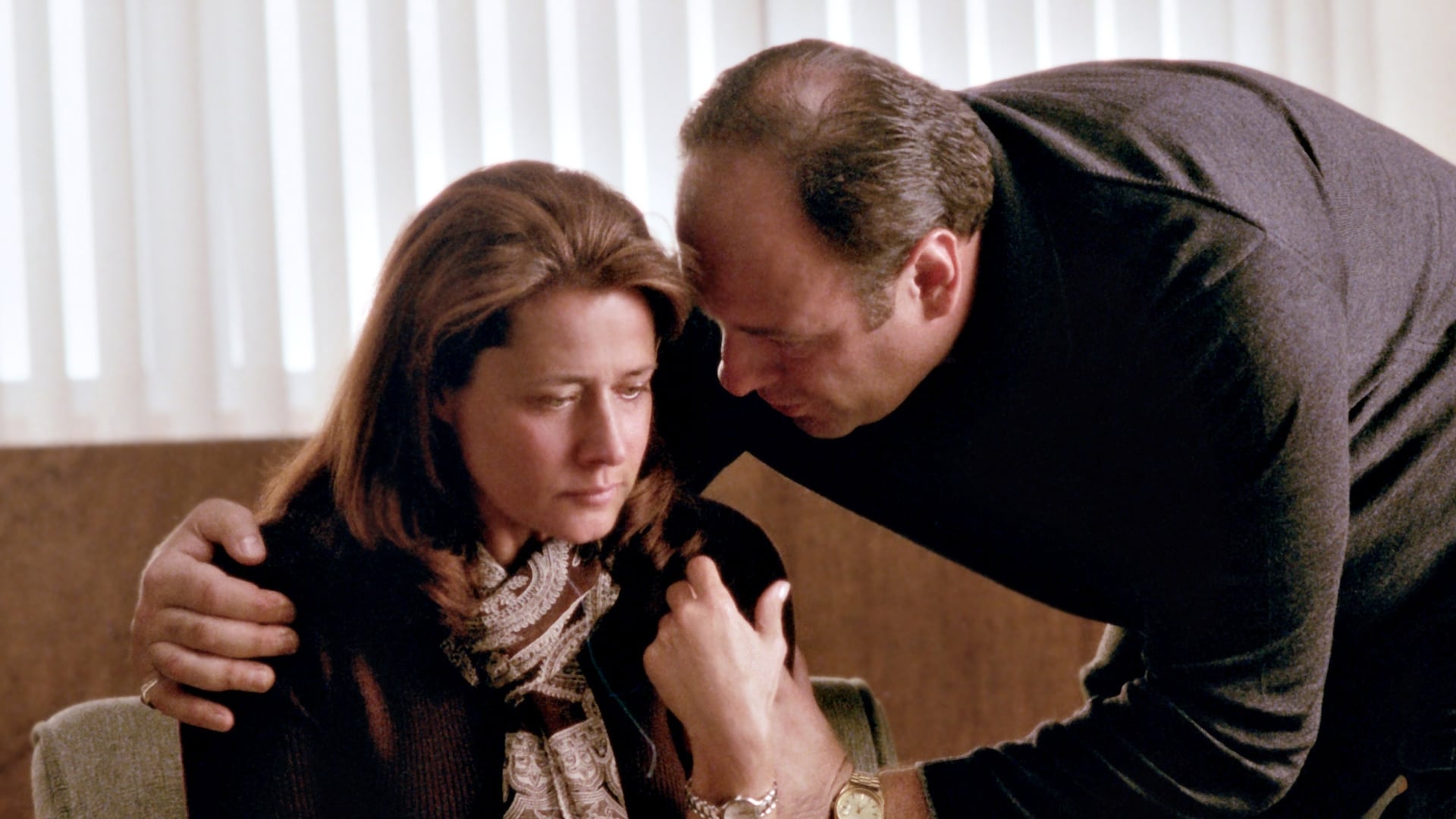
Season three of The Sopranos (2001) arrives at a pivotal juncture for the series, going through the practical tragedy of losing Nancy Marchand and the narrative necessity of evolving beyond the foundations laid in its first two seasons. This season is not a uniform masterpiece, but a richly textured, occasionally uneven exploration of consequence, legacy, and the corrosive nature of the life Tony Soprano leads. It is a season that boldly embraces the anti-climactic rhythms of real existence, even when such choices frustrate conventional television expectations.
The season opener, Mr. Ruggiero's Neighborhood, establishes a tone of quiet recalibration. Rather than launching with bombast, it adopts a "day in the life" structure, cleverly shifting perspective to the FBI's surveillance operation in Tony's basement. This narrative choice underscores a central theme of the season: the inescapable gaze of consequence. Tony's world is no longer a private fiefdom; it is under observation, both by federal agents and by the audience, who are invited to scrutinise his every moral compromise. The handling of Livia Soprano's absence is notably subtle, a testament to David Chase's restraint in allowing the series to breathe realistically rather than resorting to melodramatic exposition.
This focus on consequence deepens in Employee of the Month, widely regarded as one of the season's most powerful installments. Dr. Melfi's brutal assault and the subsequent failure of the justice system force a profound moral reckoning. The episode's refusal to offer cathartic revenge—Melfi ultimately rejects the temptation to use Tony as her instrument of vengeance—reinforces her role as the series' fragile moral compass. It is a storyline that earned its writers an Emmy, and for good reason: it confronts the grim statistics of sexual violence with unflinching honesty, highlighting how trauma reverberates long after the physical act.
However, the season is not without its missteps. Several episodes, including Another Toothpick and To Save Us All from Satan's Power, are feeling like "filler". Another Toothpick suffers from a lack of narrative focus, juggling multiple underdeveloped subplots—from Tony's encounter with a traffic officer to Bobby Baccalieri Sr.'s poignant, fatal mission—without granting any sufficient depth. Yet, even these lesser entries contribute to the season's overarching tapestry. The Christmas-themed episode, while uneventful in plot, uses the holiday backdrop to explore Tony's guilt and memory, with flashback sequences enriching the series' emotional landscape.
The season's most controversial moment arrives with University, an episode that sparked significant debate for its harrowing depiction of violence against women. The brutal murder of Tracee at the hands of Ralphie Cifaretto is not gratuitous; rather, it serves as a stark indictment of the mob world's casual misogyny and the power structures that protect predators. Tony's inability to retaliate against Ralphie—bound by the code that shields "made men"—lays bare the hypocrisy of his own moral posturing. The episode's power lies in its refusal to offer solace or justice, mirroring the bleak reality for women like Tracee in such environments.
Amidst these darker explorations, Pine Barrens stands as the season's crowning achievement. Directed by Steve Buscemi and written by Terence Winter, the episode masterfully blends brutal realism, pitch-black comedy, and profound character study. Paulie and Christopher's disastrous mission to dispose of a body in the frozen wilderness becomes a darkly comic application of Murphy's Law, exposing their incompetence when removed from their urban habitat. The episode's enduring legacy is cemented by its refusal to resolve Valery's fate—a narrative ambiguity that mirrors the unpredictability of real life and has fuelled fan speculation for decades. It is a testament to The Sopranos' willingness to prioritise thematic resonance over tidy conclusions.
Character development remains the series' bedrock, and season three deepens our understanding of its ensemble. Christopher's fraught journey to becoming a "made man" in Fortunate Son reveals the burdens of legacy and the psychological toll of inherited trauma, mirrored in A.J.'s own panic attacks. Jackie Aprile Jr.'s tragic arc, culminating in his execution in the finale Army of One, serves as a potent cautionary tale about the seductive, destructive allure of the mob life. His death, occurring abruptly and without fanfare, underscores the series' commitment to realism: in Tony's world, not every story ends with a bang; sometimes, it ends with a whimper on a suburban street.
Tony's personal life provides another rich vein of exploration. His affair with Gloria Trillo in The Telltale Moozadell and Amour Fou showcases his self-destructive patterns and the volatile nature of "amour fou"—a love that consumes and destroys. Gloria's psychological instability mirrors Tony's own, yet her actions ultimately force him to confront the collateral damage of his infidelities. Meanwhile, Carmela's moral crisis intensifies, particularly after her consultation with the blunt Dr. Krakower in Second Opinion, who advises her to leave Tony and let him face justice. Though she does not act immediately, the seeds of future rebellion are sown, adding tension to her seemingly compliant facade.
The season finale, Army of One, exemplifies The Sopranos' rejection of conventional climaxes. Rather than a grand showdown, it offers a subdued, almost mundane resolution to Jackie Jr.'s story and focuses on the quiet anxieties of Tony's parental failures. The episode's lack of suspense is deliberate, reflecting the show's core philosophy: life rarely provides neat endings. Tony's decision to send A.J. to military school, only for his son to suffer a panic attack, poignantly illustrates the cyclical nature of trauma and the limits of paternal control.
One might say that season three of The Sopranos realises the series' ambition to hold a mirror up to the human condition, warts and all. It is a season that favours psychological depth over plot mechanics, character nuance over sensationalism. While not every episode achieves the heights of Pine Barrens, even the weaker entries contribute to a cohesive exploration of mortality, moral compromise, and the elusive quest for redemption. The season's willingness to embrace ambiguity, to deny viewers easy answers, and to sit with discomfort is what elevates it beyond mere crime drama into the realm of profound television art.
Ultimately, The Sopranos season three does not seek to provide closure but to complicate. It asks its audience to sit with the messiness of its characters' lives, to recognise the grey areas where morality blurs, and to acknowledge that in the world Tony Soprano inhabits—and by extension, in our own—there are seldom heroes or villains, only flawed individuals navigating a labyrinth of their own making. It is a challenging, rewarding, and unforgettable chapter in one of television's greatest narratives, and a reminder that sometimes, the most powerful stories are those that refuse to offer us the comfort of a clean resolution.
(NOTE: All reviews can be accesed via this link.)
Blog in Croatian https://draxblog.com
Blog in English https://draxreview.wordpress.com/
InLeo blog https://inleo.io/@drax.leo
BTC donations: 1EWxiMiP6iiG9rger3NuUSd6HByaxQWafG
ETH donations: 0xB305F144323b99e6f8b1d66f5D7DE78B498C32A7