Television Review: The Sopranos (Season 5, 2004)
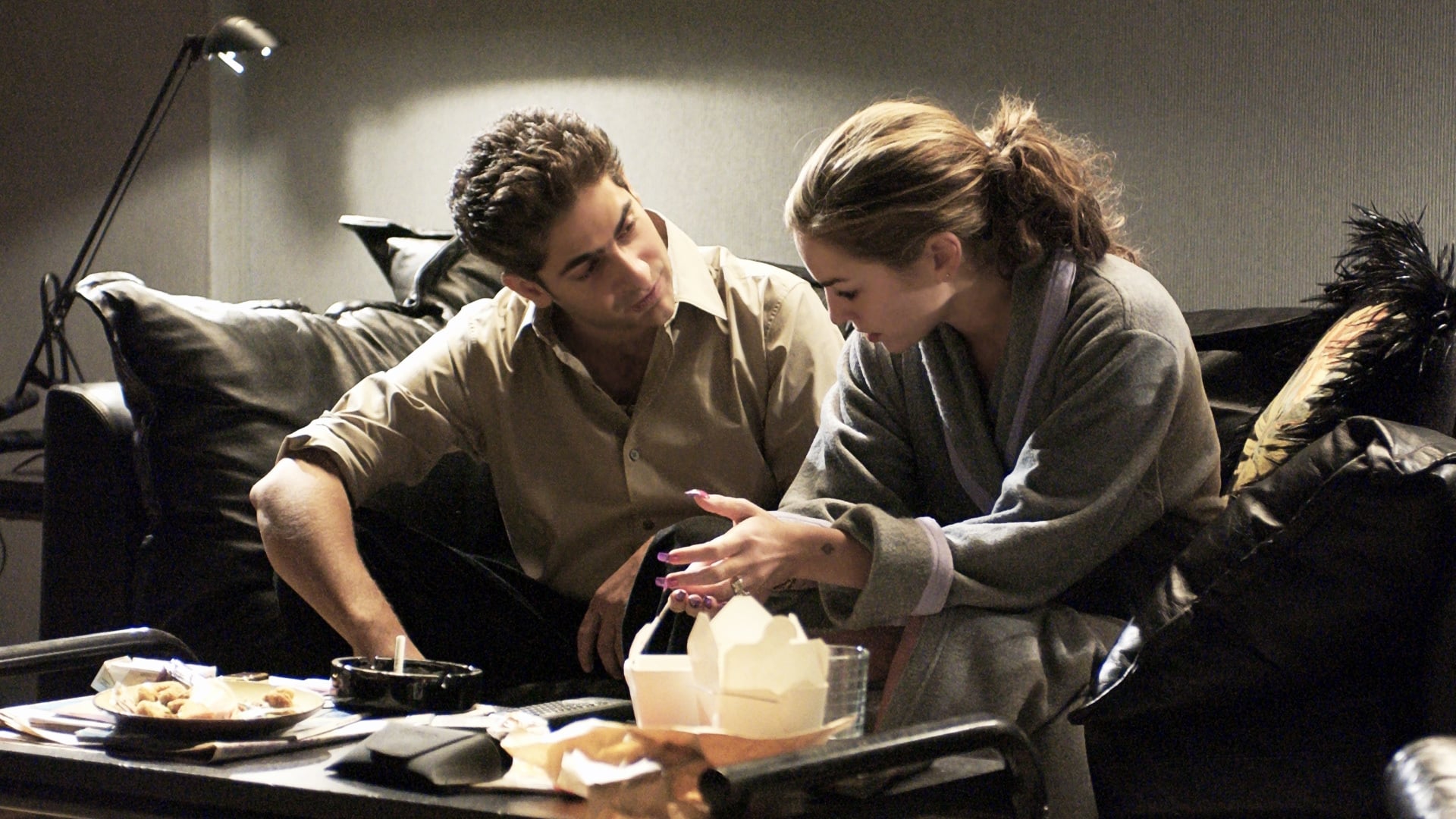
By its fifth season, The Sopranos had already reshaped the television landscape, establishing a template for prestige drama that prioritised psychological complexity over procedural convenience. Yet Season 5 (2004), arriving after an unusually protracted hiatus, found the series navigating a precarious creative juncture: balancing the narrative momentum of its established mythology against the temptation to experiment, often with uneven results. While the season delivered moments of transcendent drama—most notably in Adriana La Cerva's tragic arc—it also betrayed signs of creative fatigue, relying on familiar tropes and structural gambits that occasionally undermined the show's trademark realism.
The season opens with Two Tonys, an episode that establishes the thematic preoccupations to come: the corrosive weight of nostalgia, the fragility of loyalty, and the existential void at the heart of Tony Soprano's empire. The introduction of the "Class of '04"—mobsters released after decades of incarceration—serves as a potent metaphor for a world struggling to reconcile past glories with present decay. Feech La Manna's anachronistic bravado and Tony Blundetto's tentative return (played with poignant restraint by Steve Buscemi) immediately destabilise Tony's carefully curated authority. Yet the episode's reliance on convenient plot devices—Carmine Lupertazzi's stroke arriving with suspiciously fortuitous timing—hints at the narrative shortcuts that would occasionally mar the season's otherwise meticulous craftsmanship. Two Tonys is competent but rarely transcendent, a functional prologue rather than a statement of intent.
Where the season truly begins to coalesce is in its middle episodes, particularly Irregular Around the Margins (rated 8/10), a masterclass in claustrophobic storytelling. By narrowing its focus to Adriana's psychological unraveling and Tony's predatory ambivalence, the episode achieves a novelistic intensity that the broader narrative often lacks. Drea de Matteo's performance—earning her a well-deserved Emmy—captures Adriana's disintegration with devastating subtlety: the chain-smoking, the cocaine binges, the humiliating physical manifestations of anxiety. The episode's refusal to provide easy moral resolution—Tony's scarred forehead serving as a literal and metaphorical wound—exemplifies The Sopranos at its most uncompromising. Here, the series' exploration of complicity and self-deception feels urgently contemporary, a reminder that in Tony's world, there are no innocent bystanders.
This thematic richness extends to Unidentified Black Males, a sophisticated dissection of systemic prejudice within the mafia's insular culture. The episode's titular motif—the mob's habitual deflection of blame onto "unidentified black males"—functions as both dark comedy and searing social critique, exposing how racial scapegoating serves as a tool for self-preservation. Simultaneously, Vito Spatafore's clandestine homosexuality introduces a subversive challenge to the organisation's hypermasculine ethos. The episode demonstrates the series' capacity to interrogate prejudice without sacrificing narrative momentum, weaving personal and political strands into a cohesive whole.
Yet for every episode that advances the series' artistic ambitions, another retreats into formula. Cold Cuts exemplifies this creative stagnation, offering a thematic rehash of inherited rage and self-sabotage without the narrative innovation that distinguished earlier seasons. Janice's regression from anger-management progress to violent outburst, Christopher's cyclical victimhood, and Carmela's vacillating marital negotiations feel telegraphed rather than earned. Mike Figgis's arthouse direction—slow-motion sequences, stylised camerawork—clashes with the series' gritty realism, leaving viewers disoriented rather than enlightened. Similarly, The Test Dream prioritises surreal spectacle over psychological insight, its 20-minute dream sequence feeling more like fan service than substantive character exploration. While admirably ambitious, the episode's reliance on Lynchian absurdity and resurrected characters ultimately dilutes narrative cohesion, suggesting a creative team grasping for novelty rather than deepening existing themes.
The season's penultimate episode, Long Term Parking, restores the series' dramatic potency with Adriana's devastating execution. Terrence Winter's script and Tim Van Patten's direction craft a gut-wrenching climax that refuses to sanitise the mafia's brutality: Adriana, despite her relative innocence, becomes collateral damage in a world where survival eclipses sentiment. Michael Imperioli's portrayal of Christopher's fractured loyalty—oscillating between rage, grief, and cold pragmatism—earns the episode its critical acclaim. Yet even here, minor contrivances (Matush's improbable return, Adriana's naivety in aiding a murder cover-up) remind viewers that the series' commitment to realism occasionally wavers under narrative pressure.
The finale, All Due Respect, offers a measured denouement that balances resolution with anticipation. Tony's agonised decision to execute Tony Blundetto himself—sparing his cousin a torturous end while appeasing Johnny Sack—encapsulates the moral corrosion at the heart of his power. The episode's original conception as a series finale lends its closing moments a poignant ambiguity: Tony and Johnny's tenuous pact suggesting a precarious equilibrium rather than definitive closure. Yet HBO's insistence on a sixth season necessitates a contrived cliffhanger—Johnny's abrupt arrest, Tony's farcical escape—that strains credulity and undermines the episode's earlier gravitas. While John Patterson's direction maintains the series' trademark tension, the finale's denouement edges towards melodrama, hinting at the creative strain of prolonging a narrative beyond its natural endpoint.
Throughout the season, financial transactions serve as potent symbols of moral compromise. Carmela's $600,000 real-estate venture—secured through negotiation rather than emotional reconciliation—exemplifies the transactional rot at the heart of her marriage to Tony. Similarly, the DiMeo family's operations, valued in the millions of USD, function less as economic enterprises than as instruments of power and control. These monetary denominations underscore a central irony: in a world obsessed with wealth, genuine value—loyalty, love, integrity—remains perpetually out of reach.
In retrospect, Season 5 represents The Sopranos at a creative crossroads. Its strongest episodes—Irregular Around the Margins, Unidentified Black Males, Long Term Parking—demonstrate the series' enduring capacity for psychological depth and moral complexity. Yet its weaker entries reveal a reliance on familiar patterns and structural experimentation that occasionally prioritises style over substance. The season's exploration of nostalgia, betrayal, and moral decay remains thematically cohesive, but its execution is uneven, suggesting a creative team navigating the challenges of sustaining a revolutionary narrative framework.
Ultimately, Season 5 affirms The Sopranos' status as television's most ambitious drama, even as it betrays the strains of longevity. For viewers willing to endure its occasional missteps, the rewards remain profound: a searing portrait of a man—and a world—teetering on the brink of collapse. One might say the season is a bit like a fine whisky: occasionally rough around the edges, but with a complexity and depth that rewards patient appreciation. At a time when prestige television was still defining itself, The Sopranos Season 5 proved that even a masterpiece could stumble without losing its essential brilliance. Whether that represents artistic courage or creative exhaustion remains a question for the viewer to decide—but it is precisely this ambiguity that ensures the season's enduring fascination.
(NOTE: All reviews can be accesed via this link.)
Blog in Croatian https://draxblog.com
Blog in English https://draxreview.wordpress.com/
InLeo blog https://inleo.io/@drax.leo
BTC donations: 1EWxiMiP6iiG9rger3NuUSd6HByaxQWafG
ETH donations: 0xB305F144323b99e6f8b1d66f5D7DE78B498C32A7