The Chicory Flower: Nature’s Unassuming Beauty with a Bright Past
The chicory flower (Cichorium intybus) is a lowly roadside wildflower that often goes unnoticed, yet it carries a rich history and surprising versatility. Found across roadsides, fields, and ditches in Europe, North America, and Australia, this hardy plant thrives in sunny, well-drained spots.
With its vibrant blue petals and bright yellow center, the chicory flower looks like a tiny burst of color amid the greens of the wild. Though typically blue, it can sometimes appear white or pink, depending on the environment.
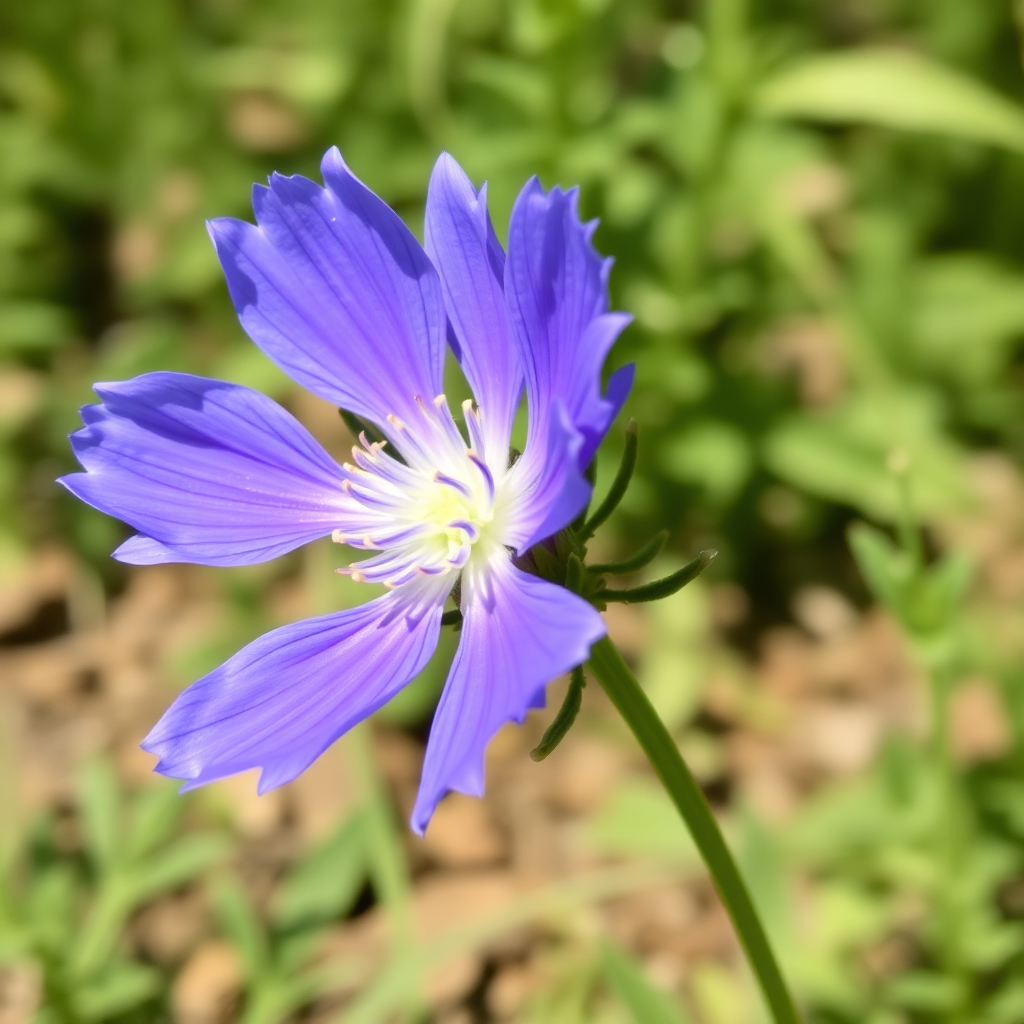
What stands out most about chicory is its resilience. The flower opens at dawn and closes by dusk, a daily cycle that echoes the rhythm of life. It grows in a rosette of jagged, green leaves at the base, with tall, branching stems that can reach up to 3 feet. Its roots are deep and robust, allowing it to survive even in poor soil.
Historically, chicory has played a quiet but significant role in human culture. The ancient Romans valued its medicinal properties, using it to aid digestion and support liver health. During times of scarcity—like the 18th and 19th centuries in Europe—chicory root became a vital coffee substitute.
Roasted and ground, it provided a bitter, earthy flavor that blended well with coffee or served as a standalone brew. Today, it’s still used in coffee mixes in countries like France and Italy.
Beyond its roots, chicory offers other uses. The leaves, when young, are edible and add a peppery kick to salads. The flowers themselves are edible and can be used to dye foods a soft blue hue, thanks to their natural anthocyanin pigments. Modern wellness trends have also embraced chicory for its potential benefits, such as aiding gut health and reducing inflammation.
For gardeners and nature lovers, chicory is a low-maintenance, beneficial plant. It attracts pollinators like bees and butterflies, making it a great addition to wildflower gardens. Sow the seeds in spring, give it sun, and watch it flourish with minimal care.
Though often seen as a weed, the chicory flower is a testament to nature’s ingenuity. It’s a reminder that beauty and utility can coexist in even the smallest, most overlooked corner of the earth.
Next time you pass a patch of chicory by the road, take a moment to appreciate its quiet charm—and the legacy it carries in history and home remedies.
Chicory teaches us that ordinary things can hold extraordinary value. After all, not every wildflower can turn a cup of coffee into a cup of history.