The Gothic crown: a work of art....
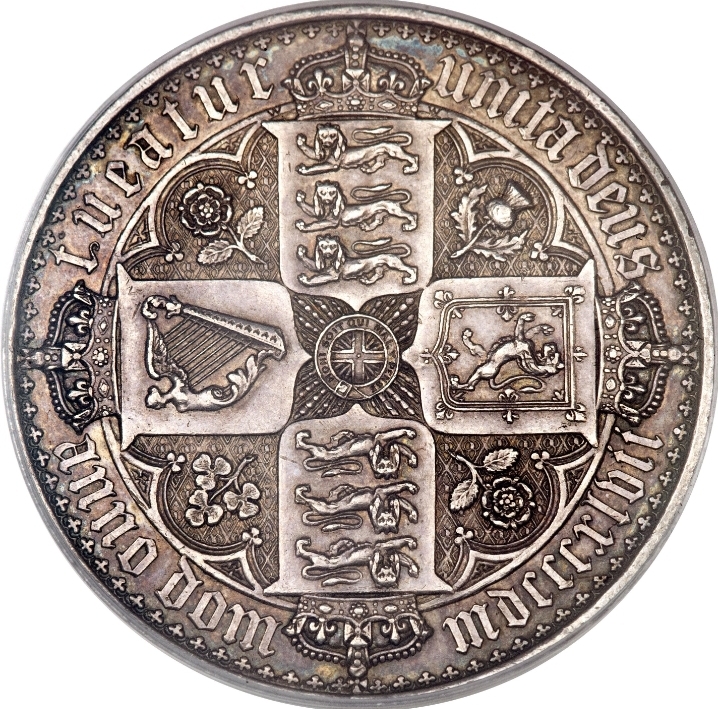
The Gothic Crown is widely celebrated as a masterpiece of Victorian art and is often considered the most beautiful silver coin ever struck in Britain. Issued primarily in 1847 to commemorate the Gothic Revival movement, it was designed by the legendary Chief Engraver William Wyon( you know him - the "Una and the Lion" guy).
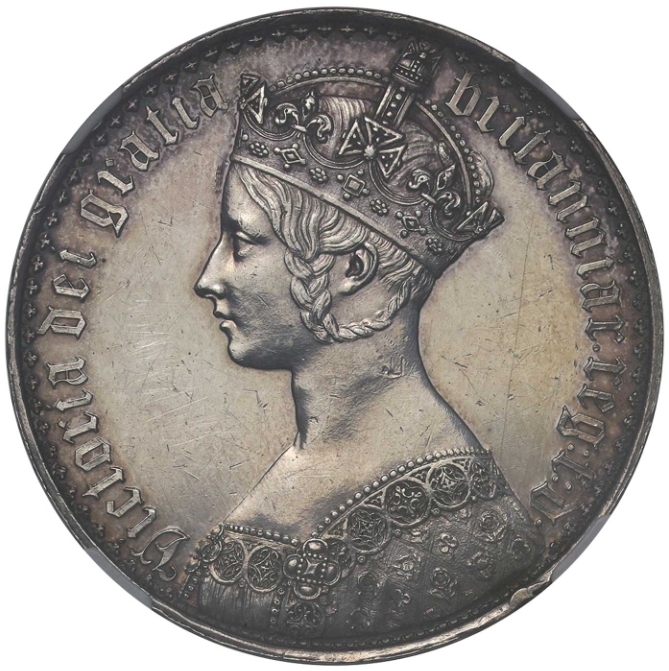
The coin's most striking feature is the portrait of Queen Victoria, which broke away from the traditional "Young Head" style. For the first time in centuries, the monarch was depicted wearing a crown—specifically a highly ornate, gem-set crown—paired with a medieval-style dress embroidered with the floral emblems of the United Kingdom. This portrait is so intricately engraved that individual stitches in the fabric and fine details in the Queen's hair are clearly visible, marking it as a masterpiece of the Victorian era.
The reverse of the coin is equally elaborate, featuring a cruciform arrangement of four crowned shields representing England, Scotland, and Ireland. The spaces between the shields are filled with roses, thistles, and shamrocks. Perhaps most famously, the coin uses Blackletter (Gothic) script for its inscriptions rather than the standard Roman lettering. This includes the date, which is written in Roman numerals (MDCCCXLVII), adding to the coin's antique and scholarly aesthetic.
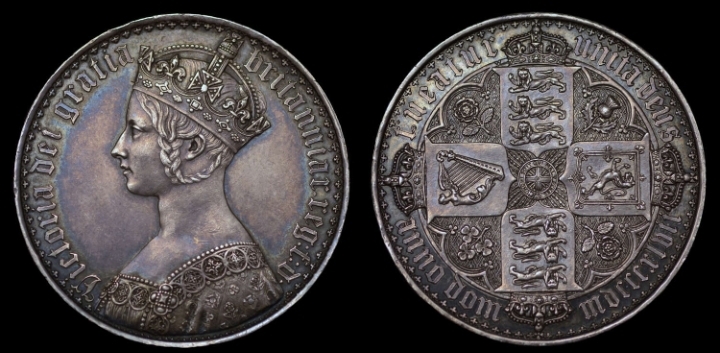
Today, the Gothic Crown is one of the most coveted prizes in the coin-collecting world. Because only about 8,000 were originally minted, they are exceptionally rare, especially in "Proof" condition with a mirror-like finish. Their value has skyrocketed in recent years, with top-tier specimens fetching six-figure sums at auction. It remains the ultimate symbol of a time when British coinage was treated not just as currency, but as a canvas for world-class fine art.