📷Firenze
Prato and Its Artistic Legacy
Prato lies about twelve miles from Florence. In the fifteenth century it was a lively little town—home to brother Lippo’s wanderings and the love poetry of Messer Angelo Poliziano for Madonna Ippolita Leoncina. A few decades later it heard the preaching of Fra Girolamo Savonarola. Its bright era ended in 1512 with a brutal sack by Spanish troops under Raimondo da Cardona.
The Duomo and the Sacred Relic
Prato’s Duomo, dedicated to St. Stephen and St. John the Baptist, is a Tuscan Romanesque church later completed in Gothic style by Giovanni Pisano, with a fine early fourteenth-century campanile.
The cathedral claims to house the Cintola, or Girdle of the Virgin. According to legend, the Virgin gave it to St. Thomas at her Assumption, and centuries later a Pratese crusader, Michele Dagonari, brought it back to Christendom. The relic is displayed on special occasions in the Pulpito della Cintola, an exterior pulpit by Donatello and Michelozzo, known for its exquisite dancing genii in relief.
Inside, a painting by Ridolfo Ghirlandaio depicts the Virgin giving the girdle to the doubting Thomas. In the left chapel, protected by an elaborate fifteenth-century bronze screen by Bruno Lapi and Pasquino di Matteo, the relic rests amid Agnolo Gaddi’s frescoes on the life of the Virgin, her gift of the Cintola, and its later recovery.
Artistic Treasures of Prato
The church contains numerous works of Florentine art:
- A pulpit by Mino da Fiesole and Antonio Rossellino
- The Madonna dell’Ulivo by Giuliano da Maiano
- Frescoes partly attributed to Starnina
Prato’s greatest artistic treasure is Fra Lippo Lippi’s frescoes in the choir (1452–1464). The cycle on the left narrates the life of St. Stephen; that on the right, the life of St. John the Baptist. Strongly influenced by Masaccio, these works were said to embody Masaccio’s spirit within Fra Filippo. His sensitivity to facial beauty, spiritual expression, and feminine grace distinguishes him from his predecessor.
Notable scenes include:
- The dancing girl at Herod’s banquet
- Her innocent demeanor as she presents the martyr’s head to her mother
- The young St. John’s farewell to his parents
- The Burial of St. Stephen, rich with Florentine portraits, including Carlo de’ Medici and Fra Filippo himself
Lippo Lippi, Lucrezia Buti, and Filippino
During this period Fra Filippo was commissioned by the nuns of Santa Margherita to paint a Madonna. He eloped with Lucrezia Buti, who had posed as his model during the Cintola festivities. Although nearly unfrocked, Fra Filippo refused the Pope’s offer of legal marriage, choosing a freer life. Near the Duomo stands the house where they lived and where Filippino Lippi was born.
Opposite Santa Margherita is a tabernacle containing a beautiful fresco by Filippino: a Madonna and Child with Angels, adored by St. Margaret, St. Catherine, St. Anthony, and St. Stephen.
In Prato’s picture gallery are four works attributed to Lippo Lippi (of doubtful authenticity) and one by Filippino, a damaged but genuine Madonna and Child with St. Stephen and the Baptist. These saints remain constant presences in Prato, the city of the Cintola.
Terracotta and Renaissance Architecture
Prato also preserves fine terracotta works by Andrea della Robbia, in the Duomo and in the churches of Our Lady of Good Counsel and Our Lady of the Prisons. The latter, Santa Maria delle Carceri, built by Giuliano da Sangallo between 1485 and 1491, is one of the most beautiful and classical Early Renaissance buildings in Tuscany.
Beyond Prato: Pistoia and the Casentino
Ten miles beyond Prato lies Pistoia, at the foot of the Apennines. It was home to Dante’s friend Cino da Pistoia, poet of Selvaggia and chronicler of Emperor Henry’s death. Long a center of factional conflict, Pistoia exemplified the Florentine policy of holding Pisa by fortresses and Pistoia by divisions.
Other towns—San Gimignano among them—fall outside this volume, though their histories are closely linked with Tuscany’s great republics.
The Casentino
The Casentino and the upper valley of the Arno form a Tuscan earthly paradise. Best reached from Pontassieve via the Consuma Pass, the region preserves an entire chapter of Florentine medieval history in its castles and monasteries.
Here ruled the Conti Guidi, descended from Gualdrada’s sons and divided into several branches: the Counts of Romena, Porciano, Battifolle and Poppi, and Dovadola. Their strongholds illustrate how feudal lords maintained autonomy beyond the power of the urban commune.
Key sites include:
- Poppi, whose castle resembles a smaller Palazzo Vecchio
- Romena and Porciano, associated with Dante
- The old bridge beneath Poppi, where the last Count Guidi surrendered in 1440
During the Medici’s second expulsion, Piero and Giuliano de’ Medici sought refuge in the Casentino, joined for a time by Bernardo Dovizi in Bibbiena.
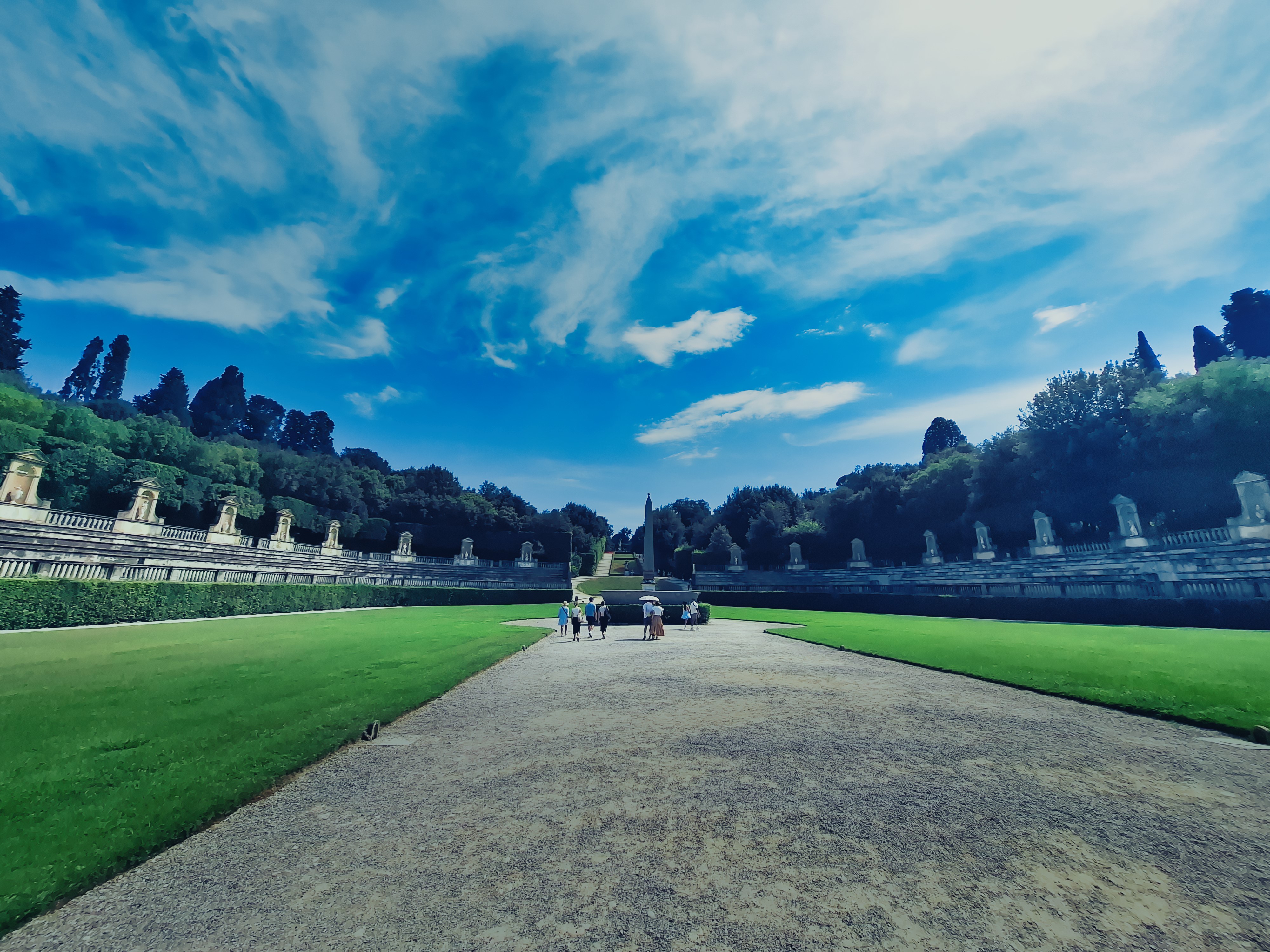
| Category | #photography |
| Photo taken at | Florence - Italy |

LET'S GO WHEREVER WE WANT 🌎🌍🌏
)
Upvoted! Thank you for supporting witness @jswit.
Excellent post and beautiful photography
Thanks for stopping by :) I really appreciate the support :) Cheers :)